


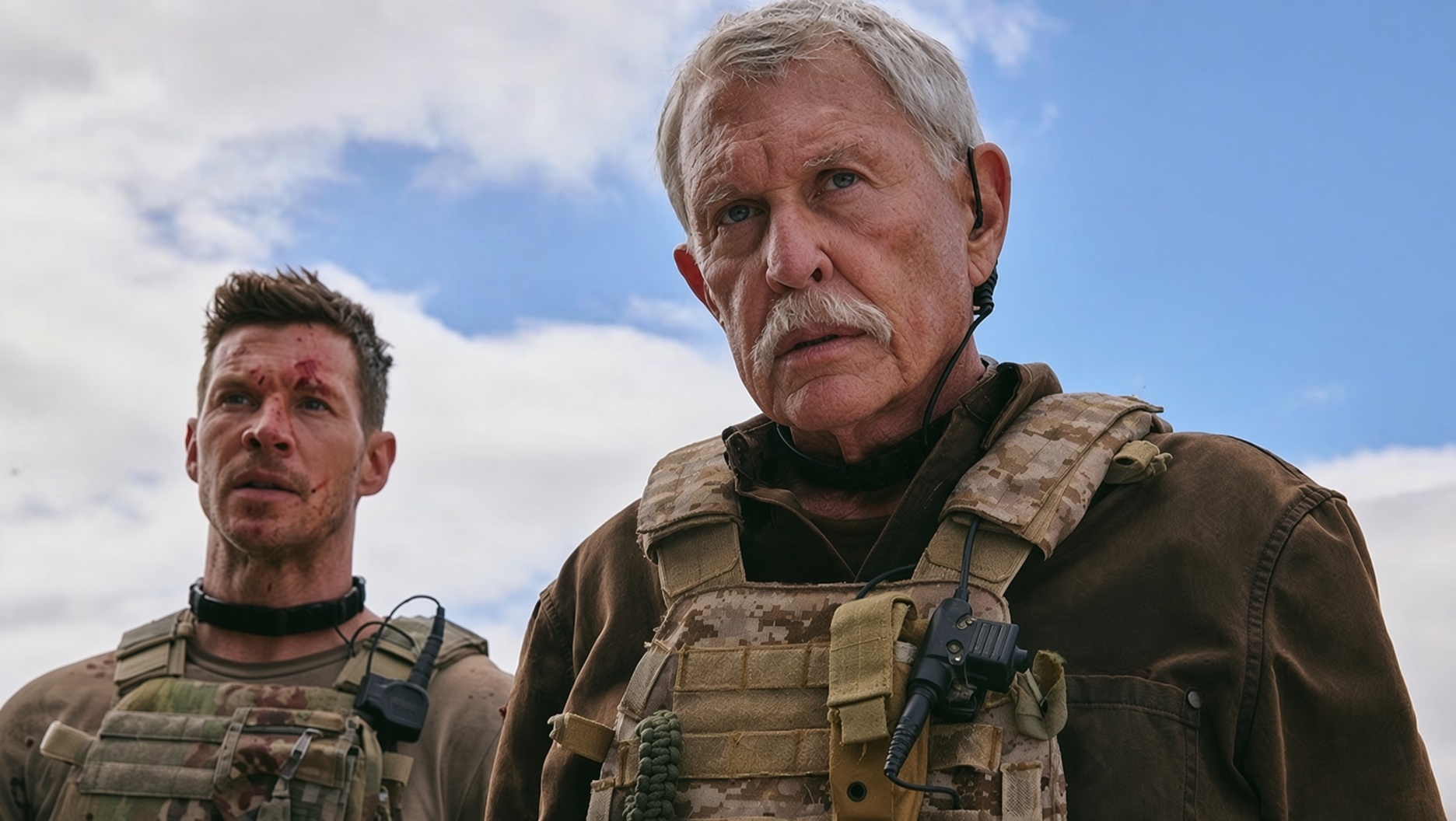
Sniper: No Nation (2026) is the 12th entry in the long-running direct-to-video action franchise that began with Tom Berenger’s 1993 original. It continues the Brandon Beckett arc and delivers exactly what series regulars have come to expect: competent tactical action, father-son legacy beats, and a no-frills “one shot, one kill” ethos, while leaning harder into continuity and political fallout than pure long-range marksmanship.
Following the events of Sniper: The Last Stand, a covert operation in the fictional Costa Verde blows up into an international scandal. The U.S. government disavows the Global Response & Intelligence Team (G.R.I.T.), branding its operatives terrorists. Ace sniper Brandon Beckett (Chad Michael Collins) goes off the grid, only to discover that the Phoenix Rebellion—his remaining allies—has been crushed by the Iron Legion, a ruthless mercenary force working for Costa Verde’s authoritarian leader. With fellow soldiers facing public execution, Brandon reunites with his father, legendary sniper Thomas Beckett (Tom Berenger), and longtime partner Agent Zero (Ryan Robbins) for an unauthorized rescue mission. No flag, no backup, no rules.
The story functions as both a rescue thriller and a setup for further installments, ending on a deliberate cliffhanger that teases a direct continuation.
Collins remains a steady, professional lead who has carried the series since Sniper: Reloaded. Robbins continues to provide reliable chemistry as Zero. Berenger’s return (his first substantial appearance in years) gives the film some welcome legacy weight and a few of the expected “one shot, one kill” moments; his scenes with Collins work better than the more nostalgic cameos in earlier sequels. The Iron Legion, particularly its armored, menacing design and its leader, supply a stronger antagonist presence than many recent entries.
The tone is more serious and survival-oriented than some of the goofier mid-franchise outings. It touches on the idea of soldiers as discarded tools once the mission ends and the political cover-up begins—an angle a few reviewers found more thoughtful than the usual DTV formula.
When the film focuses on action, it delivers. The close-quarters combat and coordinated assault sequences are tighter and better choreographed than average for the series; one extended fight sequence in particular has drawn praise for feeling closer to higher-budget action than typical direct-to-video fare. Pure sniper work is present but not the dominant mode—this installment is more about the broader tactical and political mess than isolated long-range kills. Production values are solid within the budget: practical stunts, functional locations (shot primarily in South Africa), and competent cinematography keep it watchable. Runtime sits around 95 minutes, which helps, though the middle section slows as it positions pieces for the next chapter.
The biggest issue is structural. By design, this is half a story. The cliffhanger is explicit, and some viewers understandably feel shortchanged after investing in what plays like a complete mission. Pacing dips in the second act, dialogue can be functional rather than sharp, and the film assumes familiarity with the recent G.R.I.T./Phoenix arc. Newcomers can follow the broad strokes, but the emotional and continuity payoff lands harder for longtime fans. IMDb sits in the low-to-mid 4s, reflecting the usual split between franchise loyalists and those expecting more standalone thrills or bigger production scale.
Sniper: No Nation is a sturdy, if incomplete, chapter in a durable B-movie action series. It benefits from Berenger’s return, stronger-than-usual fight choreography in places, and a willingness to treat its heroes as political liabilities rather than invincible operators. It will satisfy fans of the Beckett family saga and the later, more serialized phase of the franchise. Casual viewers or those seeking pure sniper-centric thrills may find it thinner and more transitional. If you’ve stuck with the series this far, it’s worth a watch—just know you’re signing up for Part 1 of a larger story.