


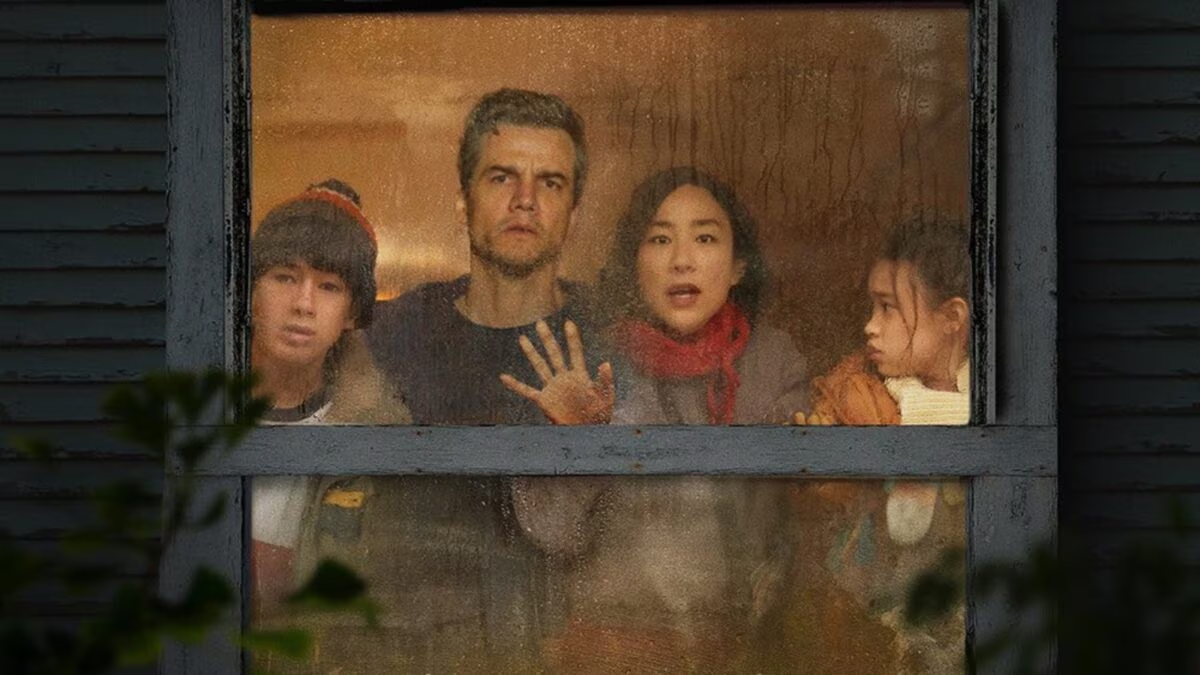
The Last House is a 2026 Netflix sci-fi thriller that traps a family inside their suburban home and asks how far ordinary people will go when the outside world becomes permanently inaccessible.
Directed by Louis Leterrier and written by Matthew Robinson, the film centers on Jason (Wagner Moura), an unemployed engineer, his wife Ann (Greta Lee), and their two children. One ordinary day, an unusual storm rolls in. When the family tries to leave the house, every door and window is sealed by an invisible force. Phones and internet fail. Neighbors appear similarly trapped. The rain does not stop. What begins as a short-term crisis stretches into an indefinite siege as food dwindles, routines collapse, and the family must invent new ways to survive using only what remains inside their walls.
Leterrier, known for kinetic action films, here works in a more contained register. The early passages generate genuine tension through the simple impossibility of escape and the gradual erosion of comfort. The house itself becomes a character—its layout, resources, and eventual decay mapped with care. Practical survival details (improvised systems, indoor growing, resource rationing) ground the story even as the larger mystery remains deliberately opaque for much of the runtime.
Moura and Lee carry the film. Both give committed, lived-in performances that sell parental determination and quiet desperation without tipping into melodrama. The child actors, playing younger and older versions of the siblings across a significant time jump, handle the emotional shifts with surprising credibility. Their evolving relationships provide the story’s most reliable through-line: the strain of prolonged isolation on a family unit, the ways people protect or fail one another, and the small rituals that keep hope alive.
Where the film is less successful is in its eventual expansion of scope. The central mystery shifts into broader sci-fi territory, and the transition is not always graceful. Some of the later revelations and set pieces feel less organic than the intimate survival drama that precedes them. Thematic ambitions—climate anxiety, human hubris, the ethics of mercy under extreme pressure—are present but only partially developed. The result is a movie that works best when it stays small and struggles when it tries to explain itself.
Still, The Last House remains a watchable, occasionally gripping exercise in claustrophobia. Its strongest stretches capture the dread of being cut off from the world and the ingenuity required to endure. At roughly 112 minutes, it moves with reasonable purpose even when the logic thins. Viewers drawn to high-concept lockdown stories or grounded family-under-pressure dramas will find enough here to hold attention, particularly for the strength of the lead performances. Those seeking airtight plotting or sustained thrills may leave less satisfied.
Now streaming on Netflix.