


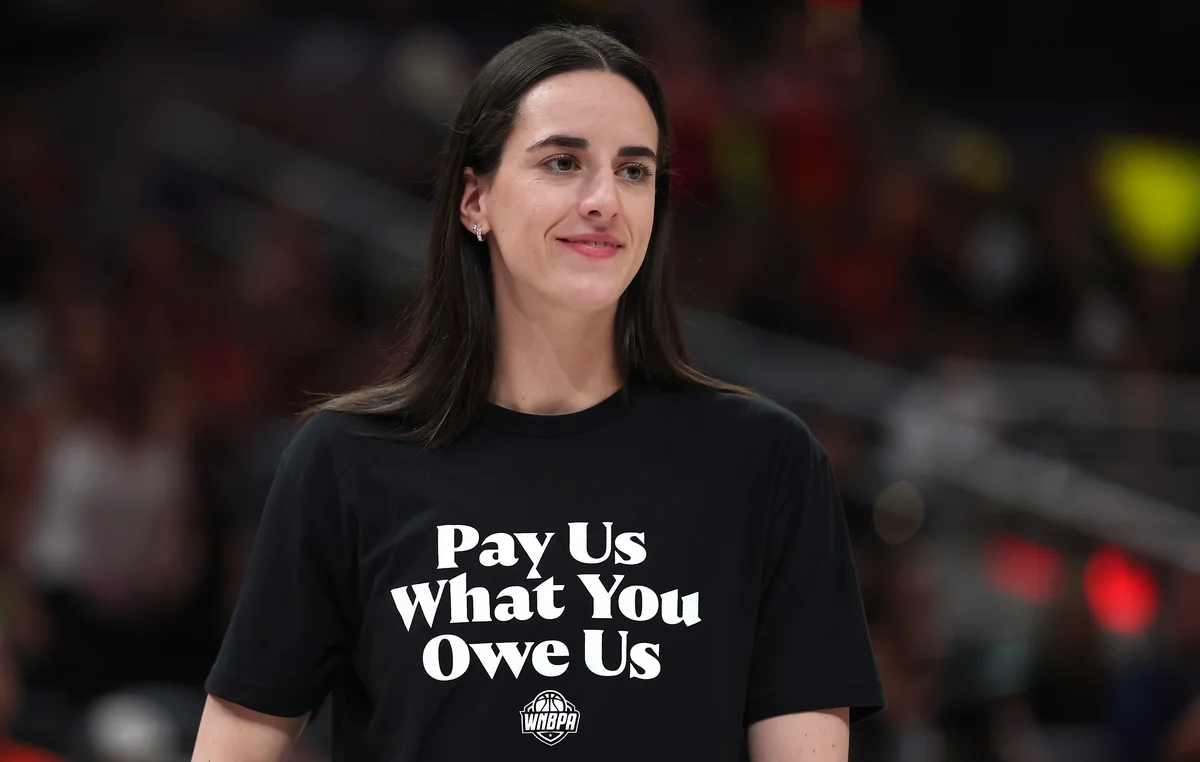
After more than 17 months of negotiations capped by eight straight days and roughly 100 hours of face-to-face bargaining, the WNBA and the Women’s National Basketball Players Association reached a verbal agreement early Wednesday on a new collective bargaining agreement that will fundamentally reshape player compensation.
For the first time in league history, salaries will be directly tied to revenue growth through a meaningful sharing model. The deal is projected to produce the WNBA’s first $1 million contracts, push average pay well beyond $500,000 and deliver substantial gains in benefits, facilities and working conditions as the league enters its 30th season.
WNBA Commissioner Cathy Engelbert and WNBPA leadership confirmed the breakthrough, which followed the players’ opt-out of the previous CBA in October 2024 and the expiration of that agreement on Oct. 31, 2025. Both sides toasted the moment with champagne shortly before 3 a.m. ET.
“This is transformational,” said WNBPA Vice President Breanna Stewart. “It creates a system where everybody gets exactly what they deserve — on the court and off. I’m excited we can tell our fans we’re going to be back.”
WNBPA President Nneka Ogwumike added: “Player salaries are now tied to a truly meaningful share of league revenue. That drives real growth in the salary cap, lifts average compensation beyond half a million dollars, and raises the professional standard across the board — housing, retirement, family planning, parental leave, everything. This is for the next generation. When you look 10 years down the road, this deal is going to keep catapulting us forward.”
Under the expiring CBA, the 2025 team salary cap was approximately $1.5 million, with supermax deals topping out below $250,000. The new framework marks a dramatic shift. Terms discussed in the final round of talks included a salary cap approaching $6 million per team, maximum salaries reaching $1 million with revenue-tied escalators, and total compensation for star players climbing toward $1.3 million in Year 1 and nearly $2 million by the end of the agreement, expected to run through 2031. Minimum salaries are expected to exceed $200,000–$250,000, while average pay across the league is projected to more than quadruple in some cases.
The inclusion of revenue sharing — long the union’s central demand — represents the most significant structural change in WNBA labor history. Players initially sought 25–27.5 percent of gross revenue; the league countered with net-revenue models. The verbal agreement bridges that divide with a hybrid system that automatically scales compensation with rising attendance, television ratings and sponsorship dollars.
WNBPA Executive Director Terri Carmichael Jackson called the outcome “real player empowerment.” Engelbert described it as “a fair, win-win agreement that moves both the players and the league forward in a transformative way.”
Beyond salaries, the deal strengthens housing stipends, retirement contributions, family-planning resources and parental leave, while mandating upgrades to training facilities and support staff.
“What we just accomplished is going to change the lives of so many players — especially the mid-tier and role players who have carried this league for years,” veteran forward Alysha Clark said.
A formal term sheet is still being finalized and will be presented to WNBA players for ratification, followed by approval from the league’s Board of Governors. Both sides expressed confidence that the 2026 season will proceed on schedule.
Training camp opens April 19, preseason begins April 25 and the regular season tips off May 8. The calendar also features the college draft on April 13, an expansion draft for new franchises and free agency for more than 100 players.
“This is going to be an amazing 30th season,” Engelbert said.
The agreement is the sixth CBA in WNBA history and arrives at a moment of unprecedented momentum for the league — record crowds, national television exposure and a new wave of star talent that has moved women’s basketball into the mainstream.
The players who fueled that surge will now share directly in its financial success. As Ogwumike put it: “We stood on business, and this is what that looks like.”
Full economic details will be released once the term sheet is ratified, but the message is already clear: the era of seven-figure salaries in the WNBA has arrived.