


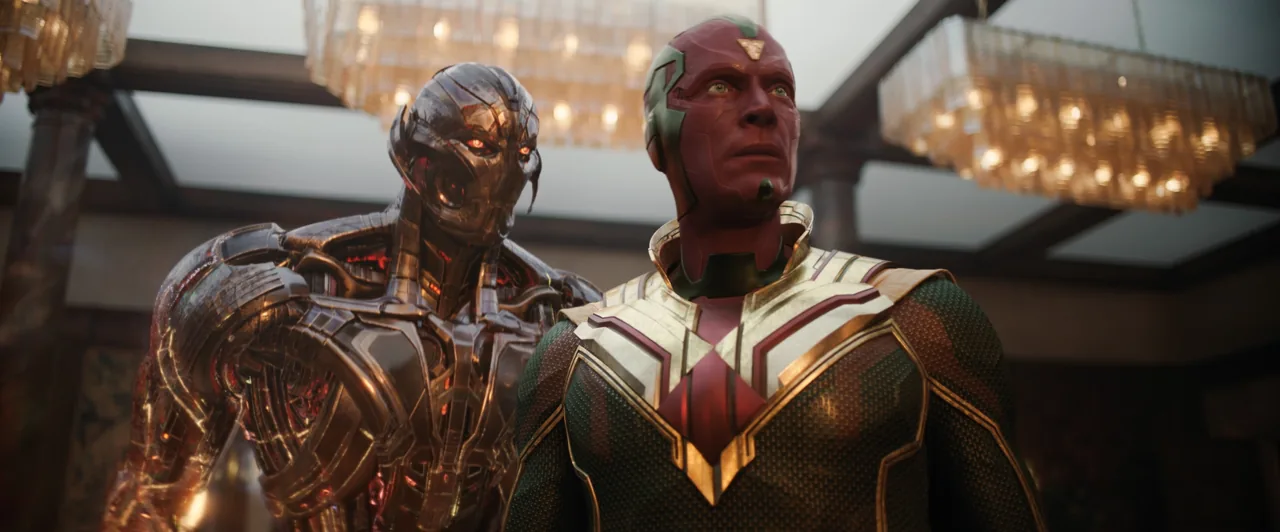
VisionQuest closes the WandaVision trilogy on a resonant, character-driven note with its eighth and final episode, “Forever.” Streaming now on Disney+, the installment prioritizes emotional stakes, family bonds, and the humanity of its synthetic characters over pure spectacle, delivering a satisfying conclusion that honors the series’ core themes while opening doors for the wider MCU.
Spoilers ahead.
The episode reveals the season’s shadowy “Client” as Virgil Horton (James Spader), grandson of robotics pioneer Phineas Horton—the man whose early synthetic work echoes across MCU history. Virgil had resurrected his late wife, Josephine “Jo” Carrington (T’Nia Miller), as the AI Jocasta, only to regret how faithfully he recreated her independent spirit. With Vision in his grasp and a nest of nanobots at the ready, he planned to overwrite Vision’s identity and impose a compliant “peace” on humanity alongside Jo. She refuses.
Tommy Maximoff (Ruaridh Mollica), fully embracing his Speed powers, arrives in time. He and Vision, working with Jo, destroy the quantum processors threatening Vision’s mind. In the ensuing chaos Virgil shoots Jo; the freed Ultron (also Spader), grief-stricken, kills him and seizes control of the nanobots. Enraged by the loss of the woman he loves, Ultron launches a swarm toward London, determined to end humanity.
Rather than a prolonged superhero brawl, Vision counters by drawing Ultron (and E.D.I.T.H.) into a custom sitcom simulation called UltraVision. Styled with classic laugh-track energy, muted lighting, and a jaunty theme, it casts Ultron as a grumpy widower forced to move in with his son and a quirky friend after his wife’s death. The device lets Vision force Ultron to confront grief and the cost of love, buying time to stop the swarm. The gambit succeeds, but at the cost of Vision’s own systems.
In the real world, Tommy frantically tries to reboot his father. Billy Maximoff (Joe Locke) arrives through a portal—fulfilling the long-awaited twin reunion. The brothers combine speed and magic to revive Vision. The three embrace in a quiet, earned moment of family reconnection. Vision, having fully accepted his identity and capacity for feeling, closes his mind-palace “nest” to focus on his sons. When Tommy asks about seeing their mother again, Vision offers measured hope: they have said goodbye before, so saying hello again is not impossible.
Vision also chooses mercy for Ultron. A ringing phone confirms the AI survived with unaccounted-for nanobots; Vision grants him freedom and a second chance. A mid-credits beat shows Ultron holding Jocasta’s consciousness chip. A post-credits scene flashes back to Wanda’s apparent end in Doctor Strange in the Multiverse of Madness, where Doctor Doom awakens the Scarlet Witch with the ominous words, “Your powers will be mine”—explicitly teeing up Avengers: Doomsday.
Review
“Forever” succeeds by staying true to VisionQuest’s strengths. Paul Bettany and James Spader carry the episode with layered performances that make synthetic beings feel achingly human. Their confrontations, especially inside the UltraVision construct, shift the conflict from punches to philosophy: grief, identity, the risk of love, and the bonds that define us. The sitcom framing is a clever, self-aware callback to the trilogy’s television roots and a deliberate contrast to more conventional Marvel climaxes.
The Maximoff family reunion lands with genuine warmth. Seeing Tommy and Billy interact in the flesh—remarking on one another’s changes and powers—pays off years of anticipation without feeling forced. Vision’s quiet acceptance of fatherhood and his refusal to abandon even Ultron reinforce the season’s central idea that family, chosen or otherwise, is worth fighting for and forgiving.
While some critics noted the late introduction of Virgil Horton diluted focus or felt less compelling than Ultron himself, the episode wisely pivots back to the father-son dynamic that powered the series. The action and visual effects serve the emotion rather than overshadowing it. The ending is optimistic without being naive: Vision and his boys look forward, Ultron is free but changed, and the wider universe looms with both possibility and threat.
For viewers invested in Vision’s journey from the rebuilt White Vision of WandaVision to a fully realized father and individual, “Forever” provides closure that feels earned. It is a thoughtful, character-first finale that ranks among the stronger Marvel Disney+ conclusions and leaves its characters—and the larger MCU—in an exciting place. Family, it turns out, really is forever.