
The United Football League announced Thursday that it will launch an expansion franchise in Oklahoma City beginning with the 2028 spring season, marking the league’s first new market since the 2024 merger of the USFL and XFL.
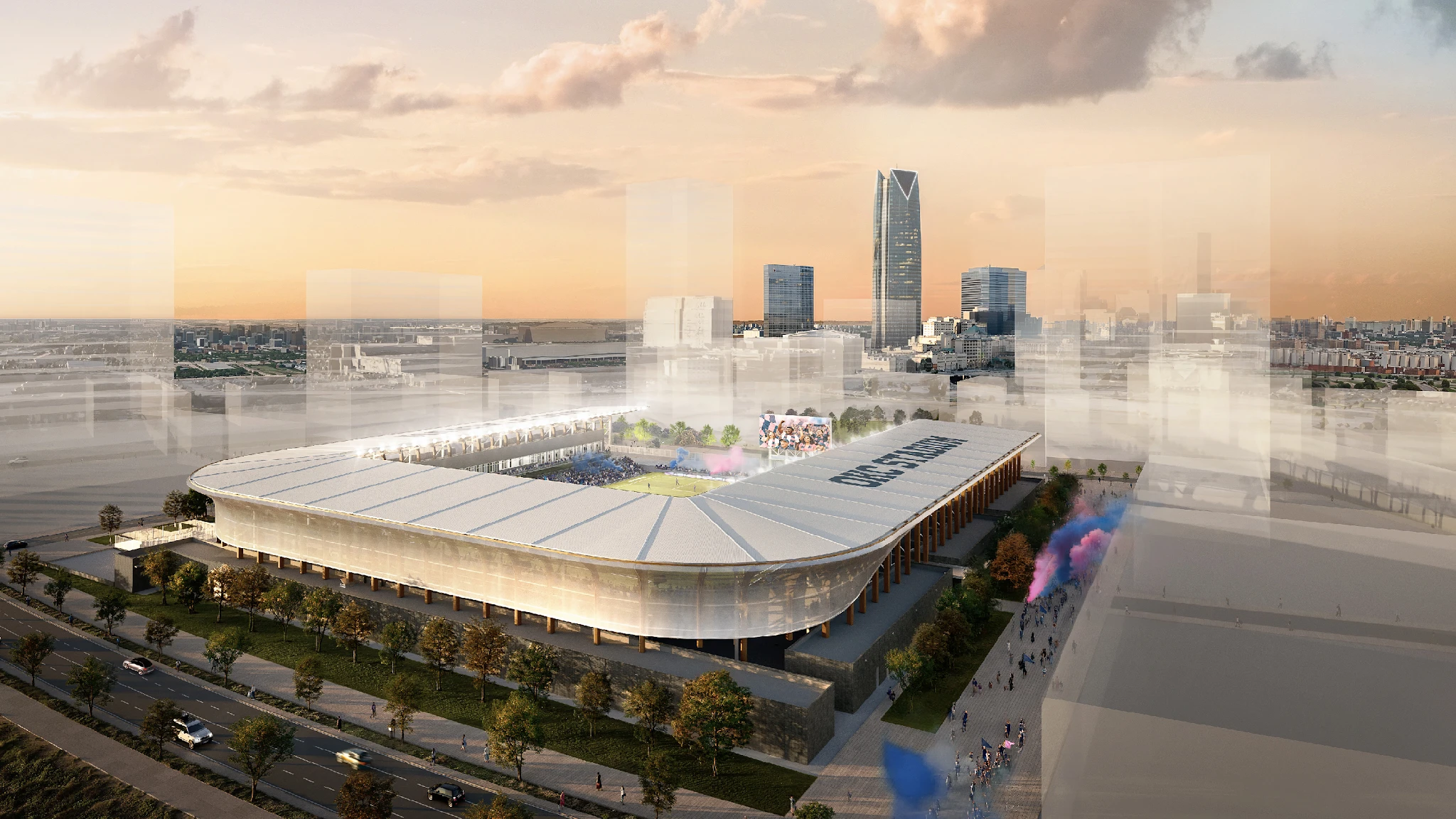
The move brings the eight-team league to 10 teams by 2028 and aligns with co-owner Mike Repole’s vision of steady growth that could see the UFL double in size to 16 teams by the mid-2030s. The new Oklahoma City squad will play its home games at the MAPS 4 Multipurpose Stadium, a state-of-the-art venue currently under construction just south of Bricktown that is scheduled to open in January 2028.
“This is a state that shows up, cares deeply, and truly understands the game,” Repole said in a statement. “From college powerhouses to Friday night lights, football runs deep here. We’re committed to building a franchise in OKC that the entire state can rally behind.”
Oklahoma City becomes the latest spring-football destination in a league that has deliberately shifted toward smaller, more intimate venues after early experiments with larger NFL-caliber stadiums proved challenging for attendance and atmosphere. The MAPS 4 stadium — designed by the globally renowned firm Populous — will seat just over 10,000 fans for soccer and football configurations. It features a canopy roof, premium suites, a dedicated supporters section with field-level seating, and an open view of the downtown skyline. The venue is part of a larger mixed-use sports and entertainment district anchored by the new Oklahoma City Thunder arena and within walking distance of Bricktown, Scissortail Park, and the convention center.
The $121 million MAPS 4 Multipurpose Stadium is funded in part by the city’s long-running Metropolitan Area Projects (MAPS) program, with $41 million coming directly from MAPS 4 sales-tax revenue. It will serve as the permanent home for OKC’s new USL Championship soccer club (currently operating as OKC for Soccer) starting in 2028, but its regulation-sized field and flexible seating make it an ideal fit for UFL football.
Construction is set to begin this spring, with the stadium expected to deliver an electric, close-to-the-action atmosphere that UFL officials believe will translate into strong in-person crowds and compelling television visuals. The league has already signed a lease agreement with the city-owned facility, which will be operated by Echo Investment Capital.
The UFL currently fields eight teams for the 2026 season: the Birmingham Stallions, Columbus Aviators, Dallas Renegades, DC Defenders, Houston Gamblers, Louisville Kings, Orlando Storm, and St. Louis Battlehawks. The addition of Oklahoma City (and one additional market expected in the coming months) fulfills Repole’s pledge to reach double digits by 2028 while continuing the league’s focus on midsize markets with passionate sports cultures and limited NFL competition.
UFL President and CEO Russ Brandon has emphasized that the league’s long-term goal is sustainable growth rather than rapid expansion. Oklahoma City checked every box: a metro area hungry for professional football, strong local TV viewership numbers for the UFL in previous seasons, and a brand-new, league-appropriate stadium coming online at exactly the right time.
Local reaction has been swift and overwhelmingly positive. Oklahoma has long been a football hotbed — home to the University of Oklahoma Sooners, Oklahoma State Cowboys, and a deep high-school football tradition — yet it has lacked a major professional gridiron presence. The Thunder’s success in the NBA has proven the market can support big-league sports, and city leaders see the UFL team as another economic catalyst for downtown development.
Team branding, colors, and a nickname have not yet been announced. League officials said those details will be unveiled in the coming months as they begin the process of building front-office staff, scouting local talent pipelines, and engaging with Oklahoma City Public Schools and community partners.
With the 2028 season still two years away, the Oklahoma City expansion gives the UFL time to refine its product while the new stadium takes shape. The league has already shown it can produce competitive, entertaining football in compact venues, and officials believe the intimate MAPS 4 setting will create the kind of loud, sellout crowds that have defined successful spring leagues in the past.
For Oklahoma City, the announcement caps years of speculation about professional football returning to the metro after previous minor-league and arena attempts. This time, the infrastructure, timing, and league commitment all appear aligned.