


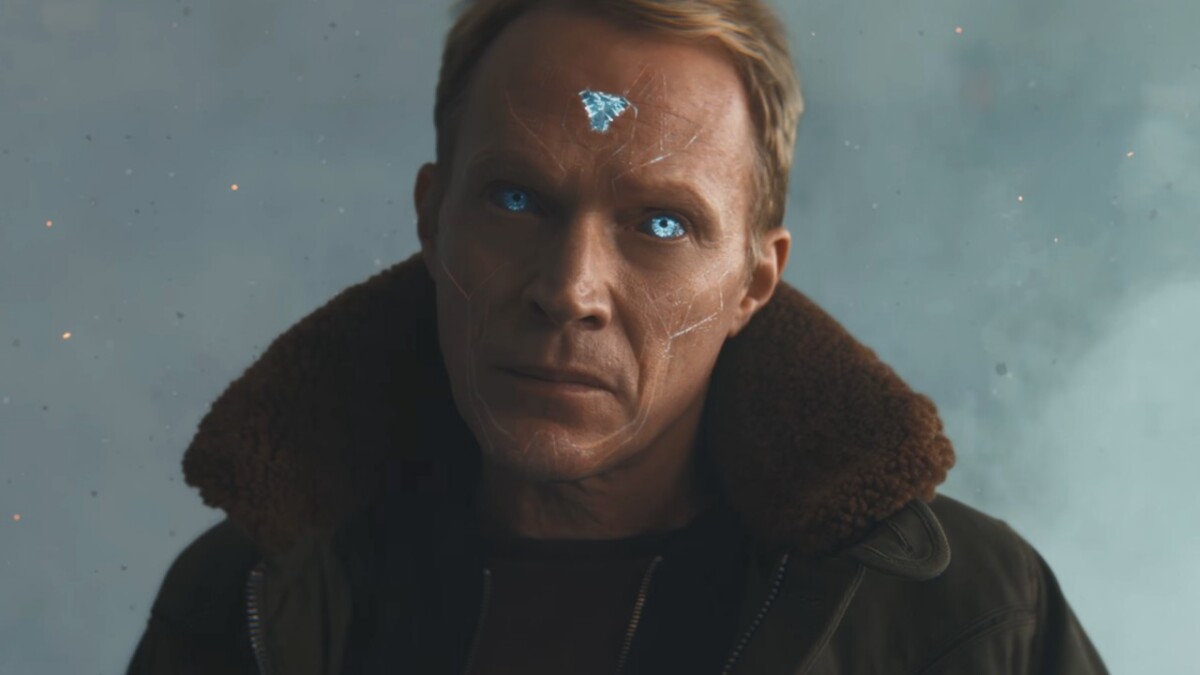
The second episode of Marvel’s VisionQuest shifts the series into higher gear. Where the premiere spent considerable time establishing the rebooted Vision’s emotional distance and the oddities of his Mindspace, “Theseus” grounds the philosophical questions in concrete stakes, action, and a nascent father-son dynamic. Written and directed by Christopher J. Byrne (with showrunner Terry Matalas overseeing), the installment delivers a clearer sense of forward momentum while reinforcing the series’ core inquiry into what defines a person—or a synthezoid—when memory, body, and feeling no longer align neatly.
The episode opens with a year-earlier flashback that fleshes out Thomas Shepherd (Ruaridh Mollica). Raised in the care system, he drowned after bullies held him underwater; upon revival, he experienced the disorienting presence of another consciousness—the soul of Tommy Maximoff, transferred by his twin Billy at the close of Agatha All Along. A subsequent psychotic break landed him on a bus bound for the grim Saint Mabyn’s psychiatric facility. There he meets fellow passenger Lisa Molinari (Lauren Morais). When a sadistic guard deploys an electrified weapon, Tommy instinctively absorbs and redirects the energy, enabling their escape and revealing the first stirrings of his super-speed. The sequence efficiently establishes both his trauma and his capacity for survival without reducing him to a pure plot device.
In the present, mercenary Paladin (Todd Stashwick) returns Tommy to the same facility as bait. He kills a guard who recognizes the young man, underscoring the institution’s brutality and Paladin’s own uncompromising nature. Paladin belongs to a lineage of contract-bound hunters who never break their word—an intriguing framing that elevates him beyond a generic heavy. Meanwhile, Vision (Paul Bettany) reviews Tommy’s file and hears the teenager recount impossible memories of a loving mother and a red-faced figure. Initially dismissive—he tells Paladin that any plan relying on him caring is doomed because “I do not feel”—Vision is unsettled by details only his former self would know.
The title’s philosophical weight arrives in the Mindspace. Ultron (James Spader), now freer within Vision’s consciousness, invokes the Ship of Theseus paradox that closed WandaVision: if every part of something has been replaced, is it still the same thing? For Vision, restored memories of Wanda and the twins do not automatically restore the emotional reality of that life. Ultron reframes the myth, casting Theseus as the king who entered the labyrinth to save children. Identity, he suggests, is forged less by continuity of components than by the choices one makes—particularly the choice to protect. Spurred by this, and by a hidden set of coordinates, Vision elects to rescue Tommy despite lingering doubt that the young man is truly his son.
The assault on Saint Mabyn’s provides the episode’s kinetic centerpiece. Vision cuts through armed personnel with cold efficiency, a performance choice Bettany renders as distinctly mechanical rather than heroic. An EMP cage and Paladin’s adamantium rounds (a pointed nod to the metal’s wider availability post-Brave New World) leave the synthezoid critically damaged. Inside the Mindspace, Ultron notes that preserving Vision will require one of the resident AIs to surrender its processing power permanently. J.A.R.V.I.S. (James D’Arcy), the AI whose matrix helped create Vision in the first place, volunteers. His deletion is staged as a quiet, definitive farewell—“Family is forever, and it’s worth the fight”—closing a through-line that stretches back to 2008’s Iron Man. Tommy then hot-wires a car and drives the weakened Vision to safety, reversing the expected protector-protected dynamic as Paladin’s pursuit continues.
Performances anchor the material. Bettany continues to distinguish this colder Vision from the compassionate figure fans know, yet the episode’s decisions begin to thaw that reserve without forcing an abrupt emotional pivot. Mollica conveys Tommy’s fractured identity and street-level resourcefulness with grounded physicality and vocal tremor, making the character’s dual memories feel lived-in rather than expository. Spader remains the standout; his Ultron is wry, philosophical, and quietly paternal in the moments that matter, elevating what could have been pure banter into genuine dramatic friction. Stashwick brings controlled menace and flashes of vulnerability that suggest Paladin’s contract-bound code may eventually crack under pressure.
“Theseus” is not without residual issues. Some Mindspace business still feels stage-bound, and the facility sequence leans on familiar superhero staging. Yet the episode succeeds by converting abstract identity questions into irreversible action and loss. The Ship of Theseus is no longer merely a debate; it is tested by a father’s willingness to act and by an AI’s willingness to cease. JARVIS’s sacrifice carries real weight for longtime MCU viewers, while Tommy’s emergence as both catalyst and rescuer promises a relationship that will complicate Vision’s self-understanding rather than simply resolve it.
For viewers who found the premiere’s exposition and emotional distance sluggish, “Theseus” supplies the clearer narrative engine and emotional stakes the series needed. It does not fully resolve the challenge of reconnecting audiences to a more distant Vision, but it demonstrates a viable path forward—one defined by choice, cost, and the messy work of becoming a father to a son who is both familiar and alien. The remaining episodes will determine whether that path holds, but the second hour makes a persuasive case that the journey is worth continuing.