


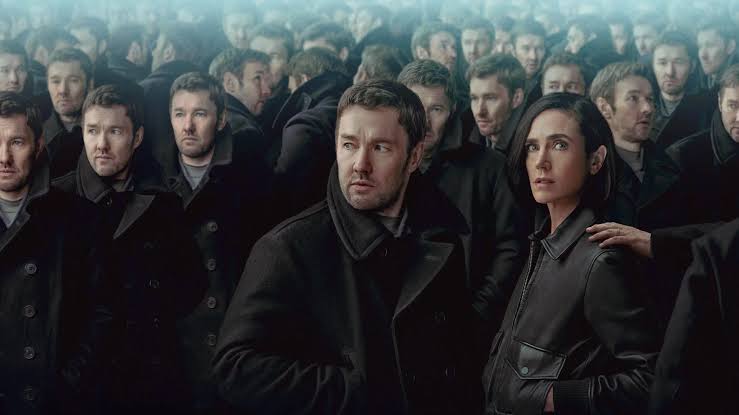
Apple TV+ continues its strong run of smart, adult-oriented science fiction with Dark Matter, the nine-episode first season based on Blake Crouch’s bestselling 2016 novel. Created and showrun by Crouch himself, the series delivers a taut, emotionally grounded exploration of the multiverse that prioritizes character and consequence over pure spectacle. It premiered in May 2024 and remains one of the streamer’s more compelling genre offerings.
Joel Edgerton stars as Jason Dessen, a Chicago physics professor living a content, if unremarkable, life with his wife Daniela (Jennifer Connelly) and their teenage son Charlie (Oakes Fegley). One ordinary night, Jason is abducted and wakes up in a reality that looks familiar but is fundamentally different—one in which the choices that shaped his family life never happened. What follows is a harrowing journey across parallel worlds as Jason fights to return to the life he knows, while confronting a version of himself who is willing to take it from him.
The premise is classic “what if” territory, but Crouch and the creative team keep it focused and human. The show is less interested in elaborate world-building for its own sake than in the personal cost of ambition, regret, and the roads not taken. Edgerton carries the series with a dual performance that distinguishes two very different Jasons through subtle shifts in posture, tone, and emotional temperature. Connelly brings quiet strength and growing unease as Daniela, while Alice Braga provides a strong, grounded presence as Amanda, a key figure who becomes entangled in Jason’s quest. Jimmi Simpson and Dayo Okeniyi round out the core ensemble effectively in supporting roles that expand the story’s scope without diluting its focus.
Visually and tonally, Dark Matter maintains a controlled, often chilly atmosphere that suits its themes. The production design of the central “Box” device and the shifting realities feels practical rather than flashy, and the series largely avoids the excess that can plague multiverse stories. Direction is steady across the season, with a deliberate pace that builds tension through character work and escalating stakes rather than constant set pieces. Some viewers may find the middle stretch a bit stretched—Crouch’s novel is relatively compact, and the nine-episode structure occasionally feels like it is carefully rationing revelations—but the final episodes deliver satisfying escalation and emotional payoff.
Critically, Season 1 landed in solidly favorable territory, with Rotten Tomatoes settling around the low 80s and Metacritic in the mid-60s. Praise has centered on Edgerton’s performance, the fidelity to the source material’s emotional core, and the series’ ability to make abstract quantum ideas feel urgently personal. Criticisms tend to focus on pacing and a sense that the high-concept material could have been tighter.
Dark Matter succeeds because it understands that the most unsettling version of the multiverse is the one that forces us to examine our own lives. It is thoughtful without being ponderous, thrilling without sacrificing character, and grounded enough that the high-concept premise never floats away. For fans of cerebral sci-fi in the vein of Constellation or the more intimate corners of Fringe, it is well worth the time.
Season 2 of Dark Matter begins on Apple TV+ on August 28.