


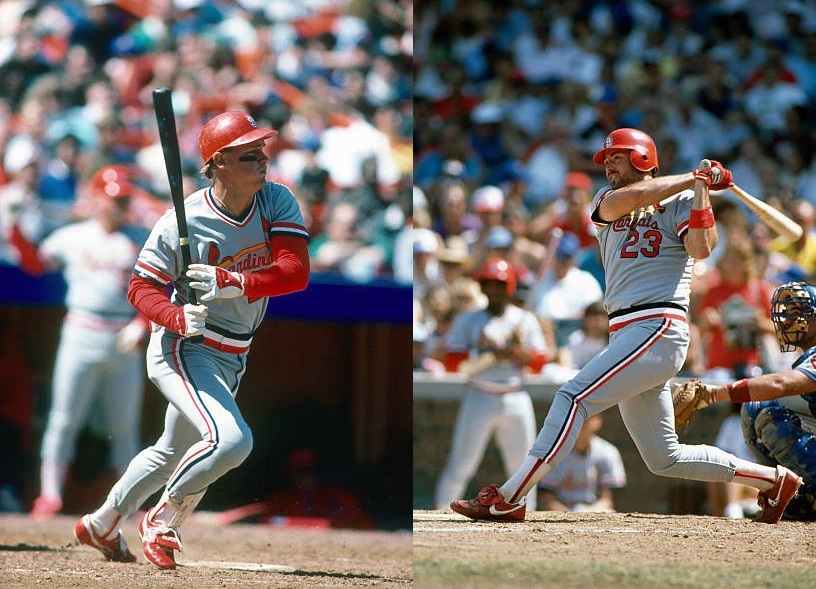
On April 22, 1988, the St. Louis Cardinals and Minnesota Twins pulled the trigger on a trade that sent shock waves through two clubhouses still stinging from slow starts. The Cardinals shipped veteran second baseman Tom Herr to Minnesota in exchange for right fielder Tom Brunansky, a swap born of desperation and roster math after both 1987 pennant winners had stumbled out of the gate.
The Twins, defending World Series champions, were 4-10 and searching for infield stability. The Cardinals, fresh off a seven-game World Series loss to those same Twins, sat at 4-11 and were averaging a paltry 2.8 runs a game. General manager Dal Maxvill had watched free-agent slugger Jack Clark walk out the door and decided the club needed more thunder in the middle of the order. Herr, entering the final year of his contract, was the logical piece to move. Brunansky, with his proven pop, was the antidote for Busch Stadium’s spacious gaps.
Herr had been a Cardinal since 1979, the glue of three pennant-winning infields and a fan favorite who embodied the club’s scrappy, fundamental style. A switch-hitter with a keen eye and Gold Glove-caliber defense, he posted his signature season in 1985: .302 average, 110 RBI, 31 stolen bases and an All-Star berth. St. Louis still remembered the walk-off grand slam he launched against the Mets in the ’87 NLCS. He was the kind of player who dreamed of retiring in red.
Brunansky, 27 and built like a linebacker at 6-foot-4, had been a cornerstone of Minnesota’s championship run. He had cracked 20 or more homers in six straight seasons, including 32 in 1987, and delivered in the ALCS when it mattered. Though off to a sluggish start in ’88, he represented exactly the right-handed thump Maxvill believed could carry a lineup through the dog days.
The deal landed like a gut punch. Herr, caught off guard despite sensing change in the air, later admitted the news hit him hard. “I could see the writing on the wall,” he said, “but I didn’t think it would happen this soon.” He cried on the flight to Minnesota, struggling to flip the switch from Cardinal lifer to Twin. Brunansky took the businesslike approach expected of a pro, while Twins manager Tom Kelly openly regretted losing a player who “played his heart out” every night.
On the field, Brunansky delivered precisely what the Cardinals ordered. In the remaining 1988 season he belted 22 home runs—more than twice any teammate—and drove in 79 runs while flashing surprising speed for a big man. He led the club in homers again in 1989 with 20. Over 320 games in St. Louis from 1988 through 1990 he totaled 43 homers and 166 RBI before being dealt to Boston for closer Lee Smith.
Yet the power infusion wasn’t enough to lift the Cardinals back to October. They finished 76-86 in 1988 and only marginally better the next year, still searching for the chemistry that defined their earlier championship clubs.
Herr’s stay in Minnesota was brief and bittersweet. He appeared in 86 games, hitting .263 before injuries and the emotional toll of the move took their toll. After the season he was shipped to Philadelphia. Many Twins fans and insiders still view the trade as one the franchise came to regret, parting with a beloved power bat for a player who never quite felt at home.
In the rear-view mirror, the deal stands as a snapshot of baseball’s cold calculus in the late 1980s. One club chased the long ball in a pitcher’s park; the other sought the steadiness of a proven winner. Brunansky gave St. Louis exactly what it asked for in the short term. Herr left behind a legacy that would eventually land him in the Cardinals Hall of Fame in 2020.
Trades like this rarely rewrite history books, but they mark the quiet turning points where rosters shift and eras begin to fade. For two franchises still measuring themselves against their 1987 glory, April 22, 1988, was one of those days.