


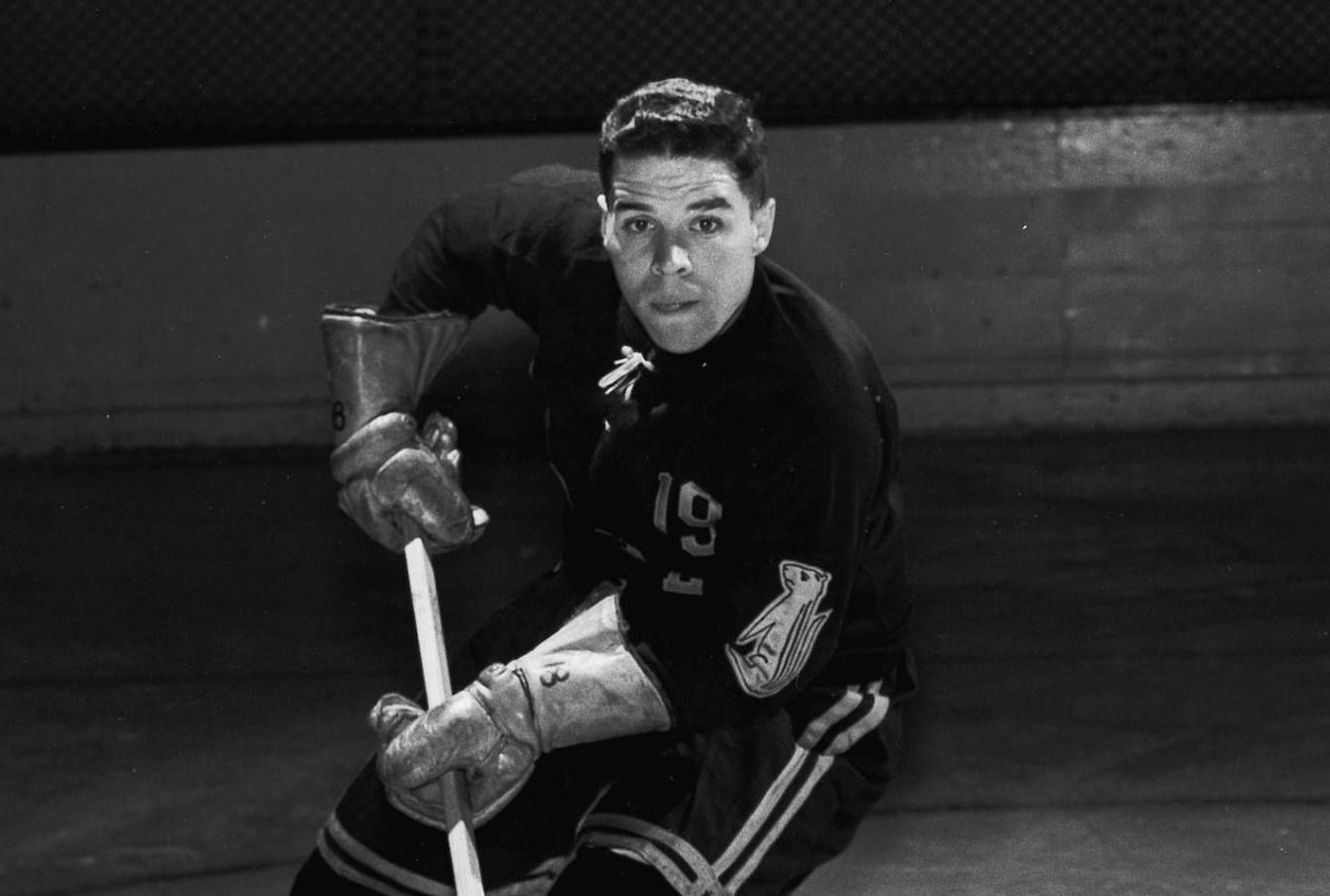
The hockey world mourns the loss of Murray Williamson, a trailblazing player, coach, and administrator whose contributions shaped the sport in the United States for decades. Williamson, a standout All-American at the University of Minnesota and head coach of two U.S. Olympic teams, died on Monday, September 15, 2025, at the age of 91. His passing marks the end of an era for Minnesota hockey and the broader amateur ranks, where he left an indelible legacy of dedication and innovation.
Born on January 13, 1934, in Winnipeg, Manitoba, Canada, Williamson’s journey to becoming a hockey legend began on the frozen ponds of his hometown. He honed his skills with junior teams like the St. Boniface Canadiens and Winnipeg Barons before catching the eye of University of Minnesota coach John Mariucci during a chance encounter while playing senior hockey in Eveleth, Minnesota. Recruited to the Gophers in 1955, Williamson quickly emerged as a star. Over three seasons from 1957 to 1959, he lettered in 76 games, amassing 79 points (32 goals and 47 assists). His senior year was particularly memorable: he earned MVP honors and was named a first-team All-American, showcasing the blend of skill and tenacity that would define his career.
After college, Williamson transitioned to semi-professional hockey, playing in Ontario and later with teams in the United States Hockey League (USHL), including the St. Paul Steers and Rochester Mustangs. But it was behind the bench where he truly excelled. Serving as player-coach and general manager for the Steers from 1962 to 1966, Williamson helped lay the groundwork for what would become a powerhouse in American junior hockey. His coaching acumen soon propelled him to the international stage, where he guided the U.S. National Team at the World Hockey Championships in 1967, 1969, and 1971.
Williamson’s Olympic tenure cemented his status as a national icon. In 1968, at the Winter Games in Grenoble, France, he led Team USA to a respectable sixth-place finish against formidable Soviet and Canadian squads. Four years later, in Sapporo, Japan, he guided the Americans to their first Olympic silver medal in hockey since 1956, a remarkable achievement that highlighted the growing competitiveness of U.S. amateur teams. Along the way, he coached future legends like Herb Brooks, Robbie Ftorek, Lou Nanne, Craig Patrick, and Jerry York—many of whom would go on to influence the sport profoundly, including Brooks’ iconic role in the 1980 “Miracle on Ice.”
Beyond the ice, Williamson was a visionary administrator. In 1973, he was instrumental in founding the Midwest Junior Hockey League, which evolved into the modern USHL, America’s premier junior league. That same year, he served as coach and general manager of the inaugural U.S. National Junior Team at the first World Junior Championships in Leningrad (now St. Petersburg), Russia. His commitment to youth development was unmatched; in 1968, alongside Bob Peters, he co-founded the world’s first formal youth hockey camp in Bemidji, Minnesota. Over 32 years, Williamson mentored more than 30,000 young players from 43 states and 15 countries, instilling not just skills but a lifelong passion for the game. In 1980, he played a key role in establishing the Hobey Baker Memorial Award, college hockey’s equivalent of the Heisman Trophy, further solidifying his impact on the sport’s growth.
Williamson’s honors reflect his multifaceted legacy. He was inducted into the U.S. Hockey Hall of Fame in 2005 as a builder, the Massachusetts Hockey Hall of Fame in 2000, the Manitoba Hockey Hall of Fame in 2009, and the University of Minnesota Athletic Hall of Fame in 2008. He also received the Hobey Baker Legend of Hockey Award, recognizing his enduring influence.
Family remained at the heart of Williamson’s life. He was the proud father of Dean Williamson, who played for the Gophers from 1987 to 1990, and grandfather to Taylor Williamson, a women’s team standout from 2016 to 2019. In interviews, Williamson often spoke fondly of these connections, crediting them as highlights of his career. His bond with mentor John Mariucci was equally profound; Williamson was by Mariucci’s side when the Gophers legend passed in 1987.
As news of his death spread, tributes poured in from across the hockey community. USA Hockey issued a statement praising Williamson as “a pioneer who built the foundation for American hockey’s rise on the world stage.” Gophers athletics director Mark Coyle called him “a true Minnesota icon whose passion for the game inspired generations.” Williamson’s story, chronicled in his book The Road to Respectability, offers an unfiltered look at the triumphs and challenges of U.S. amateur hockey in the mid-20th century—from scoring a hat trick against a collegiate all-star team led by John Mayasich to navigating the politics that once saw him fire Mariucci in a controversial decision.
Murray Williamson’s life was a testament to resilience and foresight. In an era when U.S. hockey lagged behind global powers, he helped elevate the program through sheer grit and innovation. As the sport continues to thrive, his legacy endures in every young player who laces up skates and every team that competes with pride. He will be remembered not just as a coach or player, but as the architect of American hockey’s golden age.