


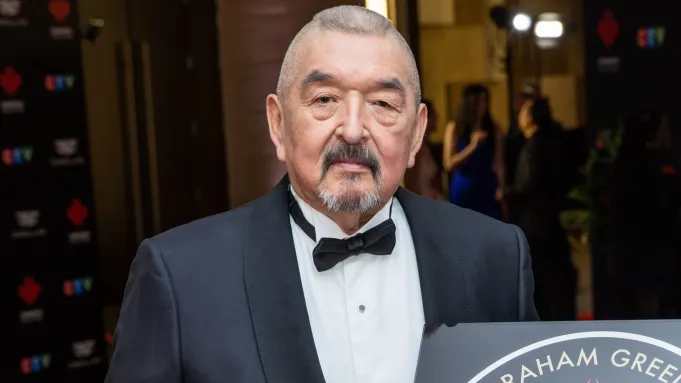
On September 1, 2025, the world lost a cinematic icon, Graham Greene, a Canadian First Nations actor whose remarkable career spanned over four decades and left an indelible mark on film, television, and theater. Greene, aged 73, passed away in a Toronto hospital after a long illness, with his wife of 35 years, Hilary Blackmore, by his side. His agent, Michael Greene, confirmed the news, stating, “He was a great man of morals, ethics, and character and will be eternally missed. You are finally free. Susan Smith is meeting you at the gates of heaven,” referencing Greene’s longtime agent who passed in 2013.
Born on June 22, 1952, on the Six Nations Reserve in Ohsweken, Ontario, Greene was a proud member of the Oneida Nation. Before his acting career took flight, he worked various jobs, including as a draftsman, steelworker, welder, and audio technician for rock bands. His entry into acting was encouraged by musician Kelly Jay, who urged him to audition for a play, setting the stage for a prolific career. By the 1970s, Greene was performing in professional theater productions in Toronto and England, making his screen debut in 1979 on the Canadian series The Great Detective and his first film appearance in 1983’s Running Brave.
Greene’s breakthrough came in 1990 with his role as Kicking Bird (Ziŋtká Nagwáka) in Kevin Costner’s Dances with Wolves. His portrayal of the wise and compassionate Sioux medicine man earned him an Academy Award nomination for Best Supporting Actor, a historic moment for Indigenous representation in Hollywood. The film itself garnered 12 Oscar nominations and won seven, including Best Picture. Greene’s performance was lauded for its authenticity and depth, helping to pave the way for more nuanced Indigenous roles in the industry.
Over his career, Greene amassed over 180 credits, showcasing his versatility across genres. His notable film roles included Thunderheart (1992) as Walter Crow Horse, Maverick (1994), Die Hard with a Vengeance (1995), The Green Mile (1999) as Arlen Bitterbuck, Transamerica (2005), Wind River (2017), and Molly’s Game (2017). On television, he appeared in series such as Northern Exposure, The Red Green Show, Longmire, Reservation Dogs, The Last of Us, 1883, Tulsa King, and Marvel’s Echo. His portrayal of Spotted Eagle in 1883 and Maximus in Reservation Dogs resonated deeply, offering authentic representations of Indigenous culture.
Greene’s contributions extended beyond acting. He narrated the documentary series The War that Made America (2006) and provided voice work for the acclaimed video game Red Dead Redemption 2 (2018) as Chief Rains Fall. His stage work earned him a Dora Mavor Moore Award, and in 2000, he won a Grammy for Best Spoken Word Album for Children for Listen to the Storyteller. In 2025, he was honored with the Governor General’s Performing Arts Award, recognizing his lifetime of artistic achievement. He was also a member of the Order of Canada, a testament to his cultural impact.
Greene’s legacy is not only in his performances but in his role as a trailblazer for Indigenous actors. He challenged stereotypes and brought authenticity to his characters, influencing a new generation of performers. He is survived by his wife, Hilary Blackmore, daughter Lilly Lazare-Greene, grandson Tarlo, and four children from his marriage. Details of a remembrance celebration are expected to be shared soon.
Graham Greene’s work will continue to inspire, reminding us of the power of storytelling and the importance of representation in the arts. His presence on screen and stage will be deeply missed but forever cherished.