


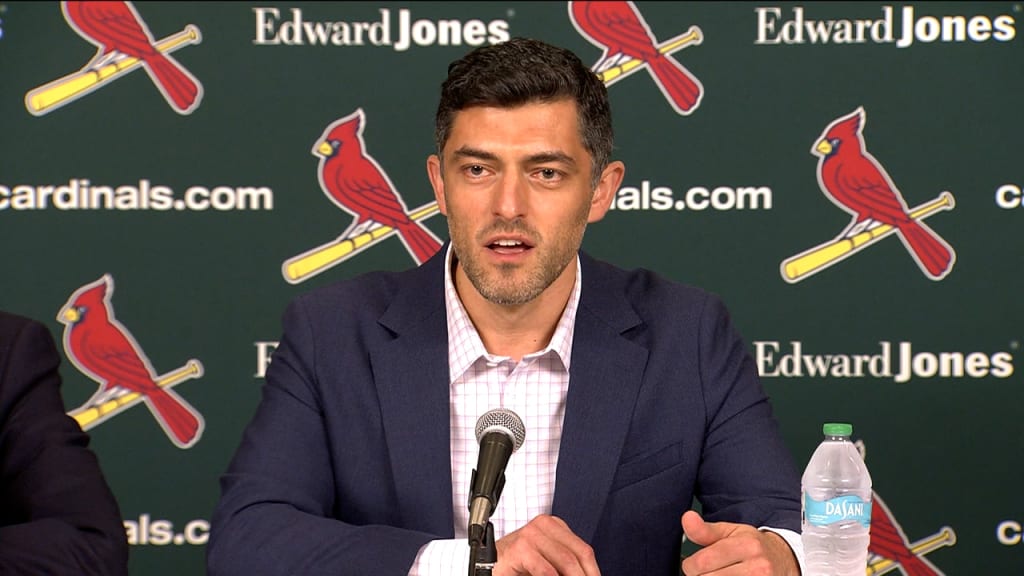
St. Louis Cardinals president of baseball operations Chaim Bloom is expected to keep the club’s offseason activity restrained, prioritizing durable veterans on brief contracts rather than aggressive spending. The approach, reported amid the General Managers Meetings, aligns with last winter’s playbook and reflects both a thin free-agent market and uncertainty surrounding the Collective Bargaining Agreement’s pending expiration.
After a 77-85 season in Bloom’s first full year leading baseball operations, the Cardinals are not positioned to accelerate their timeline with major commitments. Instead, sources familiar with the organization’s thinking indicate Bloom plans to add experienced players who can stabilize the major-league roster while remaining movable assets later in the year. The model proved useful in 2026: the club signed right-hander Dustin May and reliever Ryne Stanek to short-term deals, then traded May along with left-hander JoJo Romero at the deadline for outfield prospects Alexander Frías and Josiah Ragsdale. Both now rank among the organization’s top 30 prospects, illustrating how reversible moves can feed the farm system without locking in long-term salary.
The bullpen stands out as a clear area of need. Cardinals relievers blew 30 saves in 2026, tying for the third-most in Major League Baseball, while posting an ERA that ranked in the bottom third of the league. Addressing that group with reliable, low-commitment arms would address a clear competitive shortfall without overextending resources. A veteran starter could also make sense for a rotation that remains relatively young and may grow younger still as top pitching prospects approach the majors.
Context makes the caution understandable. This free-agent class lacks the depth of recent years, and the CBA’s December 1 expiration introduces variables around timing, incentives, and market behavior. With a promising young core already in place and additional talent arriving through the draft, international signings, and previous trades, the front office appears content to emphasize steady development over splashy additions. Reversible, short-term moves preserve flexibility for more substantial steps in 2027 or 2028 once the labor situation clarifies and the internal pipeline advances.
Fan reaction has been mixed. Some express frustration with the DeWitt family’s continued preference for controlled spending, while others view the strategy as pragmatic given the weak external options and the long-term foundation being built under Bloom. The Cardinals will continue investing in scouting and player development infrastructure, including adjustments following Rob Cerfolio’s promotion to general manager and the departure of Randy Flores to Houston.
For now, the message is consistent: gradual improvement through targeted, flexible additions rather than a sudden leap. Whether that produces meaningful contention next season or simply another year of incremental progress will depend on how those short-term veterans perform and whether the young core continues to develop on schedule.