


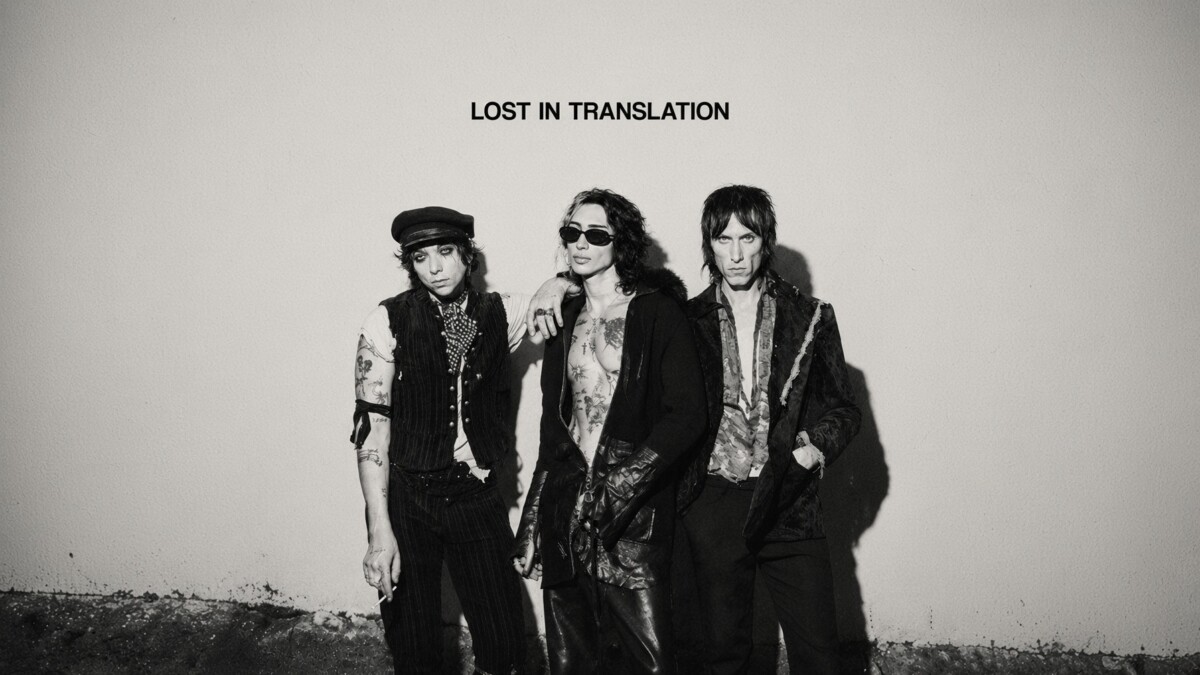
Palaye Royale have returned with “Lost In Translation,” the lead single from their sixth studio album, Amsterdamage, set for release on January 22, 2027, via Sumerian Records. Produced by Chris Greatti and released on October 2, the track arrives as the brothers—vocalist Remington Leith, guitarist Sebastian Danzig, and drummer Emerson Barrett—begin a new chapter after a period of profound personal upheaval.
Lost In Translation
Listen to Lost In Translation on Spotify. Song · Palaye Royale · 2026
The song draws on the mid-2000s Brit-rock that shaped the band in their formative years, with influences such as Arctic Monkeys and Two Door Cinema Club audible in its melodic drive and guitar textures. Danzig’s guitar work stands out, carrying those indie-leaning edges while pushing the arrangement toward a cleaner, more radio-oriented rock sound. The result feels both familiar to longtime listeners and deliberately open to a wider audience, balancing the band’s theatrical instincts with a more immediate, anthemic structure.
Lyrically, “Lost In Translation” captures the frustration of trying to hold something together when communication keeps failing. Lines about waiting by the phone, testing patience, and wondering whether words are getting through frame the central question: are we simply speaking past each other? Remington Leith has described the track as nostalgic in its musical roots yet centered on the stubborn effort to make a dream or a relationship work when obstacles keep intervening. The bridge heightens that tension into something more resolute, turning the song into one of the band’s more openly anthemic moments—warm and communal without losing the underlying urgency.
That sense of connection extends beyond the recording itself. The brothers have spoken candidly about how the process of making Amsterdamage helped repair fractured relationships after the death of their mother, Stephanie Rachel, in 2024. Emerson Barrett has called the album a force that kept them together when they might otherwise have gone separate ways, describing the experience as healing in a way that felt hard to explain. In the song, the vocals, guitars, and production mesh tightly enough that the parts feel interdependent rather than layered. The unity is audible.
Where earlier work sometimes leaned into darker theatricality, “Lost In Translation” carries a clearer sense of movement away from that weight. It is upbeat by design—intended, as the band has noted, to hit hard live—while the lyrics still acknowledge how easily things can become complicated or stalled. The track functions less as a dwelling place for grief and more as a signal of what comes next: a willingness to push forward even when understanding remains incomplete.
With Amsterdamage on the horizon and an extensive 2027 tour already announced, “Lost In Translation” serves as both introduction and marker. It shows Palaye Royale reconnecting with influences that once made them happy, tightening their sound for broader impact, and treating the act of creating together as its own form of resolution. The darkness is still referenced, but the song itself points elsewhere.