


In the annals of World War II cinema, few events loom as large as D-Day. Countless films have depicted the heroism on the beaches of Normandy, but Anthony Maras’ Pressure takes a refreshingly different approach. Adapted from David Haig’s 2014 stage play, this focused war drama zeroes in on the high-stakes meteorological deliberations in the days leading up to the Allied invasion. Rather than spectacle, it delivers a gripping, dialogue-driven thriller centered on uncertainty, expertise, and the immense human cost of command decisions.
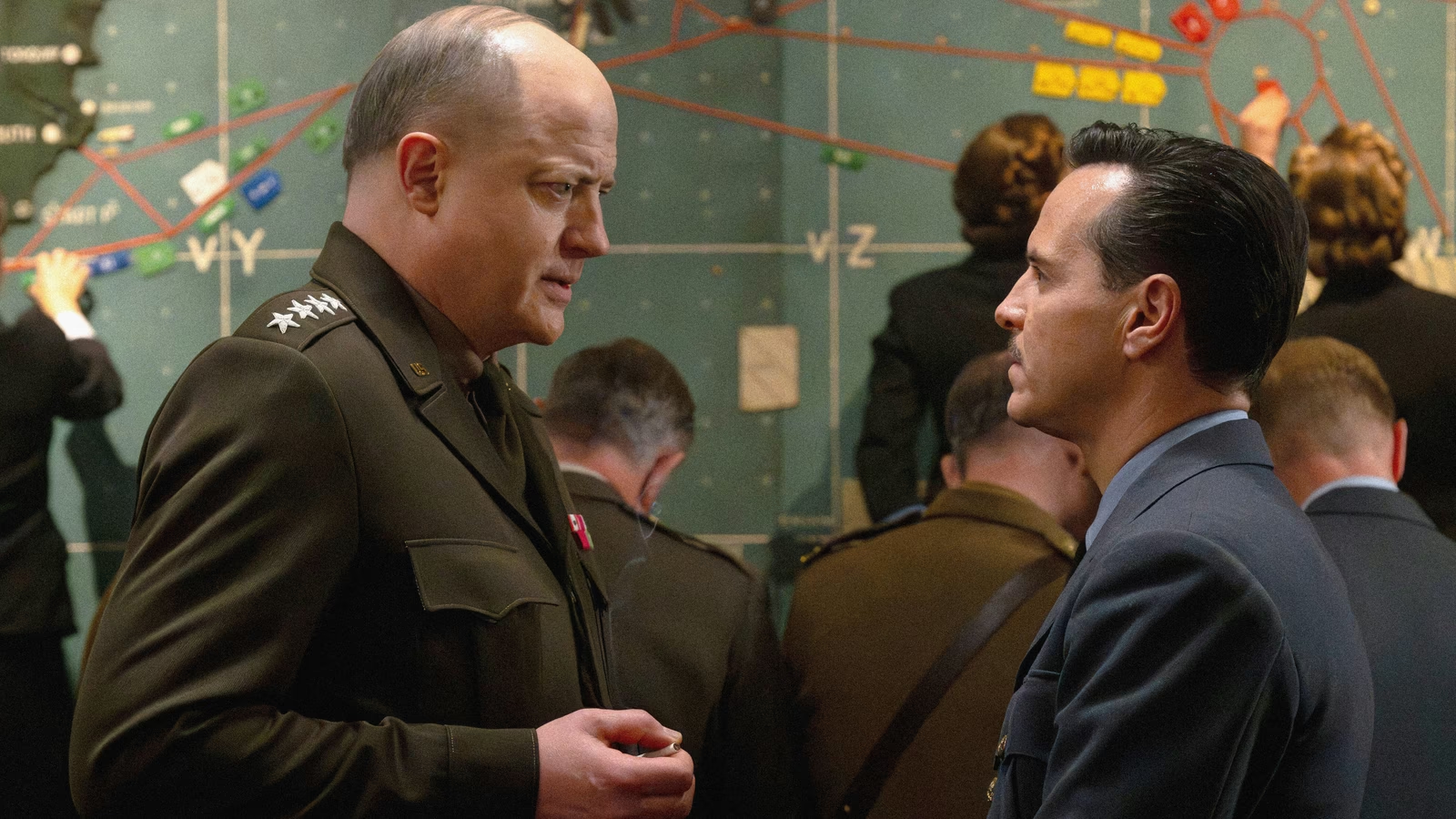
The film opens with a sobering reminder of the perils involved: the catastrophic failure of Exercise Tiger, a rehearsal that claimed over 700 lives due to poor coordination and communication. From there, the narrative shifts to the tense confines of Allied headquarters, where General Dwight D. Eisenhower (Brendan Fraser) must make the call that could determine the outcome of the war. At the heart of the story is Group Captain James Stagg (Andrew Scott), the Scottish meteorologist whose weather forecasts become the pivot on which history turns. Stagg’s insistence on delaying the invasion in the face of formidable military pressure forms the emotional and intellectual core of the film.
Scott delivers a standout performance as Stagg—a man of quiet conviction and scientific rigor navigating a room full of larger-than-life personalities. His portrayal simmers with restrained intensity, capturing the isolation of expertise when it clashes with urgency and authority. Fraser brings gravitas and humanity to Eisenhower, portraying the Supreme Commander not as an untouchable icon but as a leader burdened by doubt, responsibility, and the weight of thousands of lives. Supporting turns from Kerry Condon as Eisenhower’s aide Kay Summersby, Damian Lewis as the pompous Bernard Montgomery, and others round out a strong ensemble that makes the chamber-piece dynamics feel lived-in and authentic.
Director Maras, who also edited, maintains a brisk pace within the largely confined setting. The cinematography by Jamie Ramsay employs a muted, sepia-tinged palette that evokes the era without feeling overly stylized, while the production design meticulously recreates the map-strewn war rooms where decisions were hashed out. Tension builds not through explosions but through the friction of clashing egos, conflicting data, and the ticking clock. A subtle but effective score underscores the psychological strain without overpowering the performances.
What Pressure does particularly well is humanize the often-overlooked role of meteorology in military strategy. It transforms what could have been a dry procedural into a compelling exploration of how information, uncertainty, and groupthink intersect under extreme duress. The screenplay by Maras and Haig wisely avoids hagiography, presenting the leaders as fallible men grappling with imperfect choices. While the film’s runtime clocks in at a lean 90-100 minutes, it never feels rushed; every scene serves the central question: Launch now, or wait?
Minor criticisms include occasional moments where the stage origins show—some exchanges lean expository—but these are outweighed by the film’s strengths. It doesn’t reinvent the war movie genre, but it finds a fresh angle on one of its most dramatized chapters, proving that brains and barometric pressure can generate as much suspense as bullets.
Pressure is a smart, absorbing addition to the WWII canon—recommended for history buffs, fans of intelligent drama, and anyone who appreciates powerhouse performances. It reminds us that sometimes the most pivotal battles are won not on the field, but in the forecast.