


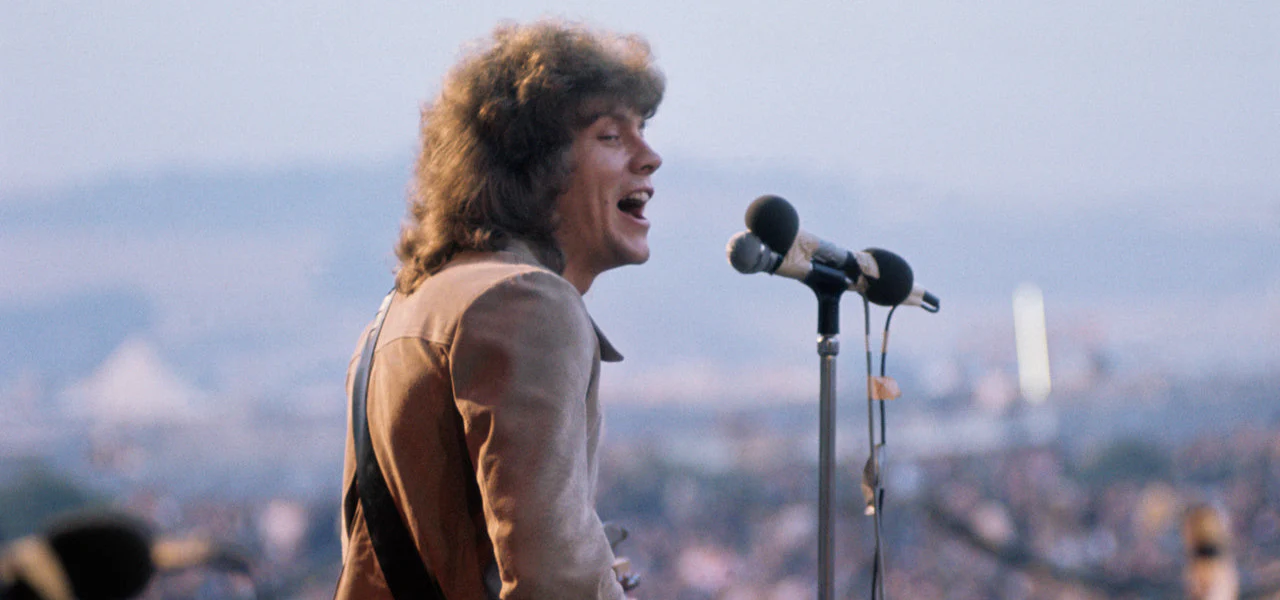
John Lodge, the bassist, singer, and prolific songwriter whose rich harmonies and innovative compositions helped propel the Moody Blues from their rhythm-and-blues origins into the vanguard of progressive rock, died on October 10, 2025. He was 82.
His family announced the news in a statement on Friday, saying Lodge had been “suddenly and unexpectedly taken from us.” No cause of death was given, and the location was not specified. The announcement came just one day before what would have been Lodge’s 83rd birthday on July 20.
Born in Birmingham, England, on July 20, 1943, Lodge grew up in the industrial heartland of the Midlands, where the smoky factories and tight-knit communities fueled a vibrant local music scene. As a teenager, he was captivated by American rock ‘n’ roll, particularly the self-penned songs of Buddy Holly, which inspired him to pick up the bass guitar at age 16. He acquired a Fender Precision bass with a distinctive sunburst finish that would become a staple in his performances with the Moody Blues.
While studying at what is now Aston University, Lodge joined a band called El Riot & the Rebels alongside his friend Ray Thomas, gigging across England’s Midlands. It was this connection that led him to the Moody Blues in 1966, after the departure of original bassist Clint Warwick and guitarist Denny Laine. Lodge famously quipped about his entry into the group: “Have bass, will travel.” He joined forces with guitarist and vocalist Justin Hayward, completing a lineup that included keyboardist Mike Pinder, drummer Graeme Edge, and multi-instrumentalist Ray Thomas.
The Moody Blues had formed in 1964 and scored an early hit with the Bessie Banks cover “Go Now,” which topped the UK charts and cracked the U.S. Top 10. But their debut album, The Magnificent Moodies (1965), underperformed, prompting the lineup shake-up. With Lodge and Hayward aboard, the band reinvented itself during the psychedelic explosion of the late 1960s, blending rock with classical influences and pioneering the use of the Mellotron—a tape-loop keyboard that mimicked orchestral sounds.
Their breakthrough came with Days of Future Passed (1967), often hailed as one of rock’s first true concept albums. Collaborating with the London Festival Orchestra, the record featured sweeping arrangements and timeless tracks like “Nights in White Satin” and “Tuesday Afternoon.” Lodge contributed supple bass lines and soaring falsetto vocals, helping craft a sound that echoed The Beatles’ Sgt. Pepper’s Lonely Hearts Club Band while carving its own mystical path.
The album’s success launched a string of innovative releases: In Search of the Lost Chord (1968), On the Threshold of a Dream (1969), and To Our Children’s Children’s Children (1969), with four consecutive albums topping the UK charts. Lodge’s songwriting shone through in hits like the upbeat “Ride My See-Saw” from In Search of the Lost Chord, the reflective “Isn’t Life Strange” from Seventh Sojourn (1972), and the anthemic “I’m Just a Singer (in a Rock and Roll Band)” from Seventh Sojourn, which peaked at No. 12 on the Billboard Hot 100. Later, he co-wrote the 1981 single “Gemini Dream” with Hayward, another Top 20 U.S. hit that infused the band’s sound with a danceable energy.
Reflecting on the era in a 1990 interview with Q magazine, Lodge captured the band’s exploratory spirit: “It was a huge time of looking for things… We used to spend night after night sitting in hotel rooms with people we’d never met before discussing everything, flights to the moon… looking for all the different religions and the mystical things… Everything was there, you know, and you were looking all the while, and this had to reflect in the songs you were writing.”
The Moody Blues took a hiatus in 1974 amid internal tensions and shifting musical tastes, but they reformed in 1977, continuing to tour and record through the 1980s and 1990s. Their 1986 single “Your Wildest Dreams” marked a commercial resurgence, reaching the Top 10 in the U.S. The band weathered lineup changes—Ray Thomas retired in 2000 due to health issues, and Graeme Edge passed away in 2021—before retiring from touring in 2019. They were inducted into the Rock & Roll Hall of Fame in 2018.
Beyond the group, Lodge pursued solo endeavors, releasing his debut album Natural Avenue in 1977, which featured a collaboration with the Electric Light Orchestra. He issued several more solo records over the decades and, in recent years, revisited Days of Future Passed with a reimagined version titled Days of Future Passed — My Sojourn. Even after the band’s farewell tour, Lodge remained active, performing with his son-in-law Jon Davison of Yes.
Lodge is survived by his wife of more than 50 years, Kirsten; a son, Kristian; a daughter, Emily; and a grandson. He was predeceased by bandmates Edge, Thomas, and Pinder, the last of the original lineup, who died in 2024.
In a 2015 interview with The Telegraph, Lodge summed up his philosophy: “We went to a village in Belgium and wrote songs, which became our stage show and album ‘Days of Future Passed.’ It was exciting when it was our own songs—we weren’t playing a song someone had written for us… We wanted to play each part exactly right and new, and like no one else had ever played that particular part to a song before.” That spirit of creation defined Lodge’s legacy, leaving an indelible mark on rock music that will echo for generations.