


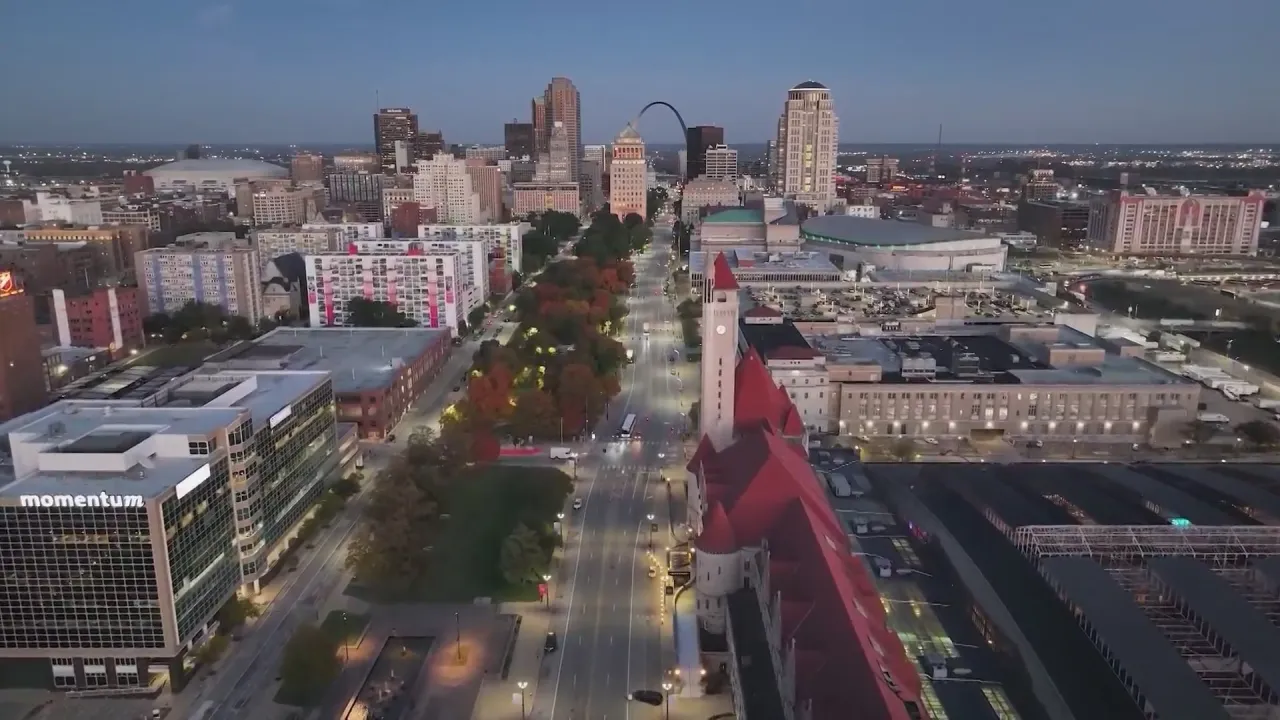
Missouri Governor Mike Kehoe signed House Bill (HB) 199 into law at a ceremony held at Union Station in St. Louis, marking a significant step toward revitalizing the city’s downtown area. The legislation, sponsored by Representative Bill Falkner and Senator David Gregory, establishes a special entertainment district encompassing much of downtown St. Louis and the Downtown West neighborhood, aimed at boosting tourism, enhancing public safety, and driving economic growth.
A New Chapter for St. Louis
The newly created entertainment district is designed to promote vibrancy and economic opportunity in the heart of St. Louis. Unlike similar special districts, it will not impose additional taxes on local businesses. Instead, it will be supported by state funding, with an initial allocation capped at $2.5 million annually through 2031, increasing to $4.5 million thereafter for up to 27 years. This funding will enable the district to hire private security to enforce laws and curfews, ensuring a safer environment for residents and visitors. Additionally, the district can leverage the state’s bonding capacity to guarantee ticket sales, making St. Louis a more attractive destination for major concerts, sporting events, and conventions.
Governor Kehoe, a St. Louis native, emphasized his commitment to the city’s revitalization, stating, “I’m proud to be born and raised in St. Louis and remain committed to revitalizing downtown. This special entertainment district marks a new chapter for business and community leaders to promote tourism, public safety, and economic growth in St. Louis.” The signing event was attended by local business leaders, community figures, and elected officials, including St. Louis Mayor Cara Spencer, St. Louis Cardinals President Bill DeWitt III, and Urban League of Metropolitan St. Louis CEO Michael McMillan, who described the district as “a purposeful investment” in the community.
Broader Implications of House Bill 199
House Bill 199 does more than create the St. Louis entertainment district. It includes over 30 provisions related to political subdivisions across Missouri. Notably, it allows the St. Charles Conventions and Sports Facilities Authority to access state tax incremental financing (TIF) without requiring a local TIF first. The bill also extends eligibility for the Waterways and Ports Trust Fund to the St. Louis Port Authority and permits counties such as Benton, Camden, Miller, and Morgan, along with the City of Lake Ozark, to establish their own entertainment districts.
The legislation has garnered bipartisan support, with State Senators Karla May and Brian Williams, both Democrats, joining Republican House members Jim Murphy and Brad Christ at the signing ceremony. This collaborative effort underscores the broad appeal of initiatives aimed at economic development and public safety.
Community and Business Support
Local leaders and businesses see the entertainment district as a catalyst for change. Michael McMillan highlighted its mission to “promote public safety, create a sense of density and vibrancy, and drive economic opportunity and activity.” St. Louis Mayor Cara Spencer noted that the district positions the city for “an enormous amount of change,” aligning with other recent developments, such as the Gateway Arch Park Foundation’s $670 million redevelopment plan for the Millennium Hotel.
Business leaders, including Stifel Financial Corp. CEO Ron Kruszewski and developer Steve Smith of City Foundry STL, expressed optimism about the district’s potential to draw more visitors and investment. The announcement of a new Harry Potter attraction at Union Station by developer Bob O’Loughlin further signals the area’s growing appeal as an entertainment hub.
Addressing Safety and Economic Challenges
The entertainment district addresses long-standing concerns about safety and economic stagnation in downtown St. Louis, which has faced challenges with vacant buildings and a reputation for late-night disturbances. The ability to hire private security, combined with state-backed funding, aims to create a safer and more welcoming environment. Governor Kehoe noted that the district’s governing board, yet to be formed, will track tourism numbers to measure its impact, ensuring accountability and effectiveness.
A Step Toward a Vibrant Future
The creation of the St. Louis entertainment district is part of a broader wave of legislative actions by Governor Kehoe, who also signed bills on the same day addressing education, workforce development, and alcoholic beverage regulations. By fostering public-private partnerships and leveraging state resources, HB 199 represents a strategic effort to position St. Louis as a premier destination for entertainment and tourism.
As St. Louis looks to build on recent improvements, such as declining murder rates and major redevelopment projects, the entertainment district offers a promising framework for economic revitalization. With strong community support and strategic investments, downtown St. Louis is poised to reclaim its place as a vibrant center of culture and commerce in Missouri.