


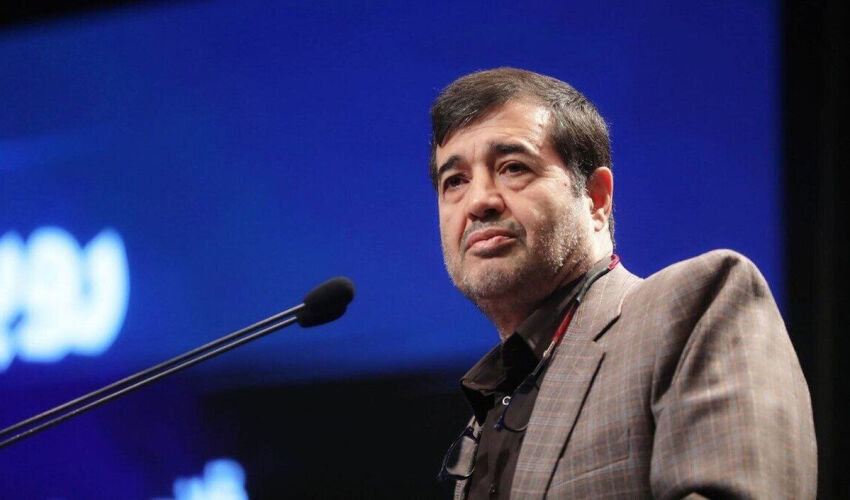
In a significant development at the crossroads of international relations and global athletics, Iran’s Minister of Sports and Youth, Ahmad Donyamali, announced on Wednesday that the Iranian national soccer team will not participate in the 2026 FIFA World Cup. The decision stems from escalating military tensions with the United States, which Donyamali described as rendering participation both impractical and hazardous.
During an appearance on Iranian state television, Donyamali articulated the rationale with clarity: “The United States has imposed two wars on us in just eight or nine months, resulting in the deaths of thousands of our citizens,” he stated, characterizing the actions as those of a “corrupt regime.” He emphasized security concerns, particularly given that several matches are scheduled in U.S. venues such as Los Angeles and Seattle. “Under these circumstances, the safety of our athletes cannot be assured, and participation is not feasible,” Donyamali added.
The announcement follows U.S.-led airstrikes, conducted in coordination with Israel, that reportedly led to the assassination of Iran’s Supreme Leader, Ayatollah Ali Khamenei, on February 28. This event has intensified regional conflicts, further complicating Iran’s involvement in the tournament.
For the 2026 World Cup—co-hosted by the United States, Canada, and Mexico, and set to commence on June 11 with an expanded 48-team format—this withdrawal creates logistical challenges. Iran had been drawn into Group G alongside New Zealand, Belgium, and Egypt. FIFA officials now face the task of addressing the vacancy, potentially by inviting a replacement team such as Nigeria, which narrowly missed qualification.
Iran’s national team, Team Melli, has a respected history in the competition, having qualified for the World Cup seven times since 1978, including appearances in 2014, 2018, and 2022. However, the current geopolitical climate has overshadowed sporting preparations, leading to this unprecedented boycott.
FIFA President Gianni Infantino recently discussed the matter with U.S. President Donald Trump, who affirmed that the Iranian team would be permitted to compete despite the ongoing hostilities. Infantino shared details of the conversation on social media: “President Trump reiterated that the Iranian team is, of course, welcome to compete in the tournament in the United States.” In a subsequent interview, Trump expressed a more neutral stance, stating he “didn’t care” whether Iran participated. FIFA has not provided additional comments on the situation or outlined specific contingency plans.
This is not the first instance of political issues affecting Iran’s World Cup participation. In 2022, the team navigated domestic protests and international scrutiny but proceeded to compete. The present scenario, marked by active military engagement, appears to preclude any such accommodation.
As preparations for the tournament continue, Iran’s absence highlights the broader implications of international conflicts on global sports, potentially altering the competitive dynamics and prompting FIFA to revisit protocols for such contingencies.