


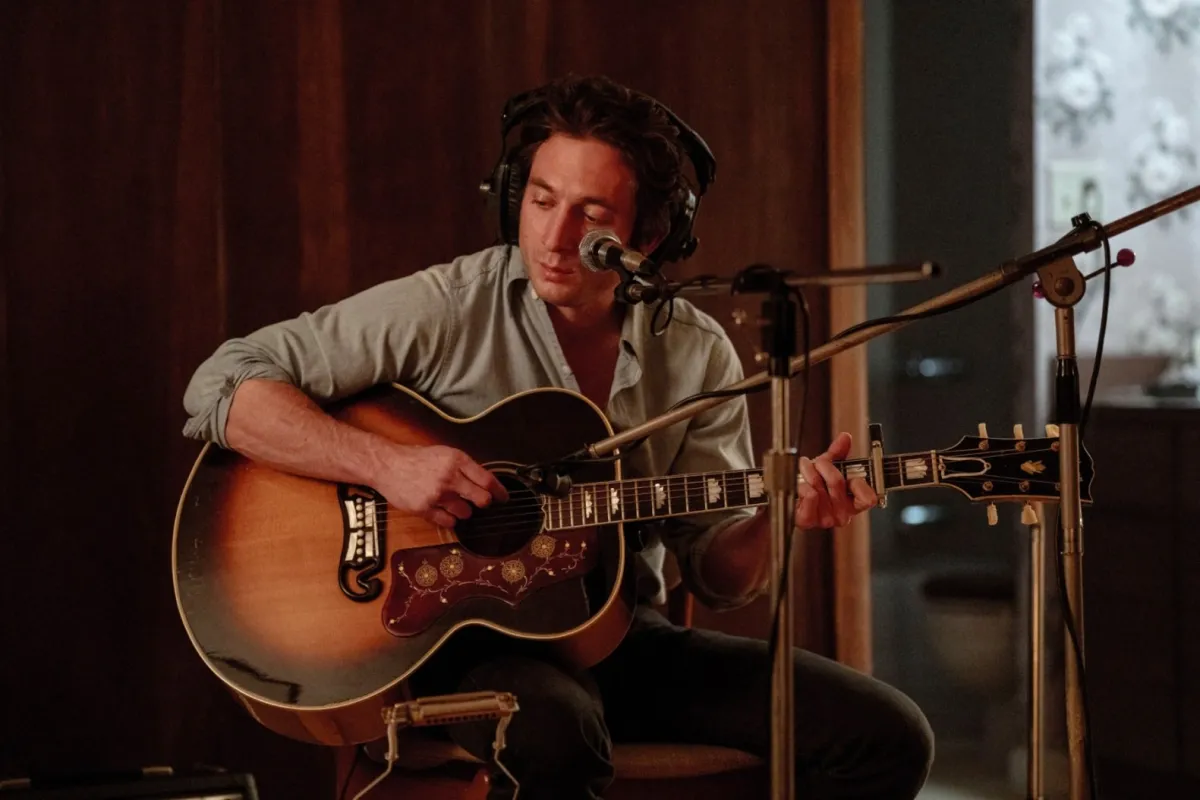
Bruce Springsteen has always been more than just a rock star—he’s the working-class poet laureate of America, channeling the dreams, struggles, and quiet desperations of everyday people through his music. His 1982 album Nebraska stands as one of his most raw and intimate works: a stripped-down, lo-fi collection of acoustic tales about lost souls, crime, heartbreak, and the search for meaning. Recorded largely alone in his New Jersey bedroom on a four-track cassette machine, it was a bold departure from the arena-rock anthems of The River and the bombast that would follow with Born in the U.S.A..
The 2025 biopic Springsteen: Deliver Me from Nowhere (directed by Scott Cooper and starring Jeremy Allen White as The Boss) dives into this pivotal, shadowy chapter of Springsteen’s life. Based on Warren Zanes’s acclaimed 2023 book of the same name, the film focuses narrowly on the early 1980s—post-The River tour exhaustion, personal depression, family ghosts, and the creative breakthrough that became Nebraska. Note: The title the user mentioned, “Springsteen: Road to Nowhere,” appears to be a common misremembering or variant reference to this film (perhaps blending it with Springsteen’s song “Road to Nowhere” or the road-trip elements in his story), as no separate movie by that exact name exists; this is the major recent Springsteen cinematic release.
The movie opens with a moody, introspective tone, flashing back briefly to a young Bruce dealing with his troubled father (played intensely by Stephen Graham), then jumping to 1981 where Springsteen, fresh off massive success, retreats inward. Fame weighs heavy; the pressure from Columbia Records clashes with his need for artistic honesty. Jeremy Allen White captures this vulnerability remarkably well—his physical transformation, vocal imitation, and quiet intensity make him a convincing Springsteen without veering into caricature. White portrays a man wrestling with depression, isolation, and the fear that success might strip away his authenticity. Jeremy Strong shines as manager Jon Landau, a steadfast confidant who fights for Springsteen’s vision against industry pushback.
Director Scott Cooper (Crazy Heart) keeps things meditative and melancholic, avoiding the flashy montages or triumphant arcs of typical musician biopics. Instead, we get long scenes of Springsteen alone with his guitar, poring over Flannery O’Connor stories, watching films like Badlands, or driving aimlessly—moments that echo the haunted, cinematic quality of Nebraska itself. The soundtrack uses the songs sparingly but powerfully, letting tracks like “Nebraska,” “Johnny 99,” and “Atlantic City” emerge organically from the story rather than dominating it.
That restraint is both the film’s strength and its occasional weakness. Critics have noted mixed reactions: some praise its soulful character study and refusal to mythologize Springsteen, calling it affecting and sincere (with strong notices from outlets like The New York Times for sitting with the pain). Others find it brooding to the point of inertia, repetitive, or too focused on personal turmoil over the music’s broader cultural impact. It doesn’t aim for crowd-pleasing highs—there’s no big E Street Band reunion or stadium glory here. Instead, it lingers on the darkness that fueled one of Springsteen’s most enduring records.
For longtime fans, the film offers cathartic insight into how Nebraska—often seen as a detour—was actually a necessary reckoning, a way for Springsteen to confront his demons before roaring back with Born in the U.S.A.. It humanizes the icon without sanitizing him, showing creativity as messy, painful, and redemptive. Casual viewers might find the pace slow and the focus narrow, but that’s part of its authenticity: Nebraska wasn’t made for arenas; it was made in solitude.