


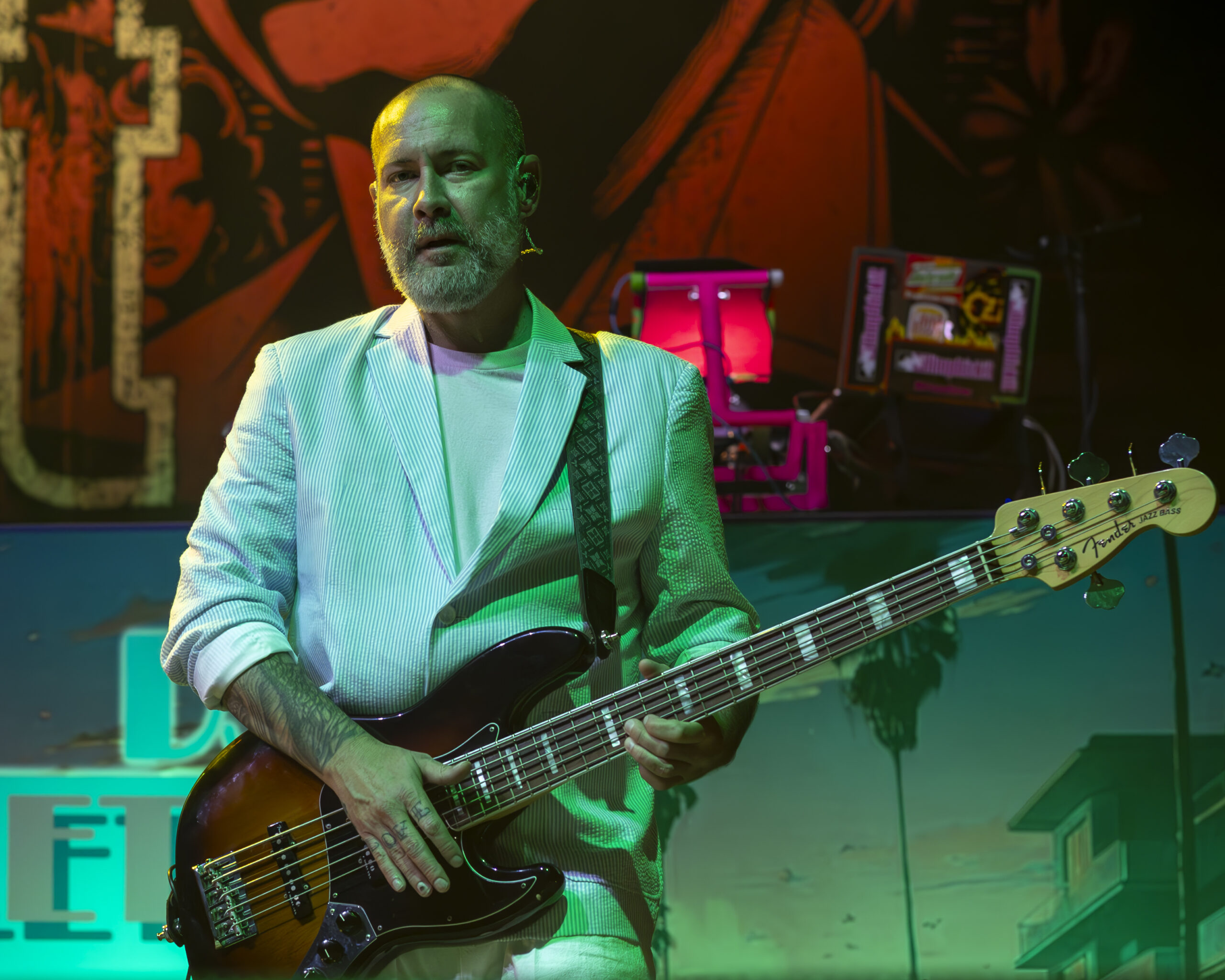
In a heartbreaking announcement that has sent shockwaves through the rock and nu-metal communities, Limp Bizkit revealed the death of their founding bassist, Sam Rivers, on Saturday. Rivers, who was 48, passed away earlier in the day, though the band did not disclose a cause of death.
The news was shared via an emotional Instagram post from the band, accompanied by a black-and-white photo of Rivers on stage, his bass slung low and a focused intensity in his eyes. “Today we lost our brother. Our bandmate. Our heartbeat,” the caption began, setting a tone of profound grief and reverence. The statement continued: “Sam Rivers wasn’t just our bass player — he was pure magic. The pulse beneath every song, the calm in the chaos, the soul in the sound.”
Signed by frontman Fred Durst, drummer John Otto, guitarist Wes Borland, and DJ Lethal, the tribute painted Rivers as an irreplaceable force. “From the first note we ever played together, Sam brought a light and a rhythm that could never be replaced. His talent was effortless, his presence unforgettable, his heart enormous,” they wrote. Reflecting on their shared history, the band added, “We shared so many moments — wild ones, quiet ones, beautiful ones — and every one of them meant more because Sam was there.” They concluded with a poignant farewell: “And his spirit will live forever in every groove, every stage, every memory. We love you, Sam. We’ll carry you with us, always. Rest easy, brother. Your music never ends.”
DJ Lethal, Limp Bizkit’s turntablist, echoed the sentiment in a comment on the post, urging fans to honor Rivers’ legacy while respecting his family’s privacy. “Give Sam his flowers and play Sam Rivers basslines all day! We are in shock. Rest in power my brother! You will live on through your music and the lives you helped save with your music, charity work and friendships. We are heartbroken 💔. Enjoy every millisecond of life. It’s not guaranteed ✌️.”
Born on September 21, 1977, in Jacksonville, Florida, Rivers grew up immersed in music, influenced by the gritty sounds of punk, hip-hop, and heavy metal that would later define Limp Bizkit’s explosive style. He met Durst while working together at a Chick-fil-A in the early 1990s, bonding over their mutual love of music. The two first collaborated in a short-lived band called Malachi Sage before recruiting Otto and forming Limp Bizkit in 1994. Borland and Lethal soon joined, completing the lineup that would catapult the group to global fame.
Limp Bizkit’s breakthrough came with their 1999 album Significant Other, featuring the smash hit “Nookie” and the iconic cover of The Who’s “Behind Blue Eyes.” Their follow-up, 2000’s Chocolate Starfish and the Hot Dog Flavored Water, debuted at No. 1 on the Billboard 200 and included anthems like “Rollin’ (Air Raid Vehicle)” and “Take a Look Around” (from the Mission: Impossible 2 soundtrack). Rivers’ driving bass lines provided the rhythmic backbone for Durst’s raw, aggressive vocals and the band’s genre-blending fusion of rap, metal, and turntablism — a sound that dominated late-’90s and early-2000s airwaves and festival stages.
Despite lineup changes over the years — including Borland’s temporary departures — Rivers remained a constant presence, contributing to albums like 2003’s Results May Vary and the band’s 2021 comeback effort Still Sucks. Offstage, he was known for his quiet demeanor contrasting the band’s high-energy chaos, and he occasionally delved into production and charity work, supporting music education initiatives.
The nu-metal scene, already mourning other losses this year, has been quick to pay tribute. Fans flooded social media with memories of mosh pits, festival sets, and the sheer adrenaline of Limp Bizkit’s live shows, where Rivers’ grooves often ignited the crowd. “RIP to the heartbeat of Limp Bizkit,” one user posted on X, sharing a clip of Rivers shredding during a 2014 performance at England’s Sonisphere Festival. Others recalled his subtle but essential role: “Sam Rivers didn’t scream the lyrics, but damn, his bass made you feel every word.”
As the band processes this unimaginable loss, their words ring true: Rivers’ music endures. From the thunderous riffs of “Break Stuff” to the introspective thrum of “My Way,” his contributions helped define an era. Limp Bizkit’s remaining members have not announced future plans, but in a statement that captures the essence of their bond, they affirmed that Rivers’ “music never ends.”
Our thoughts are with Rivers’ family, friends, and the Limp Bizkit collective during this difficult time. Rest in power, Sam.