


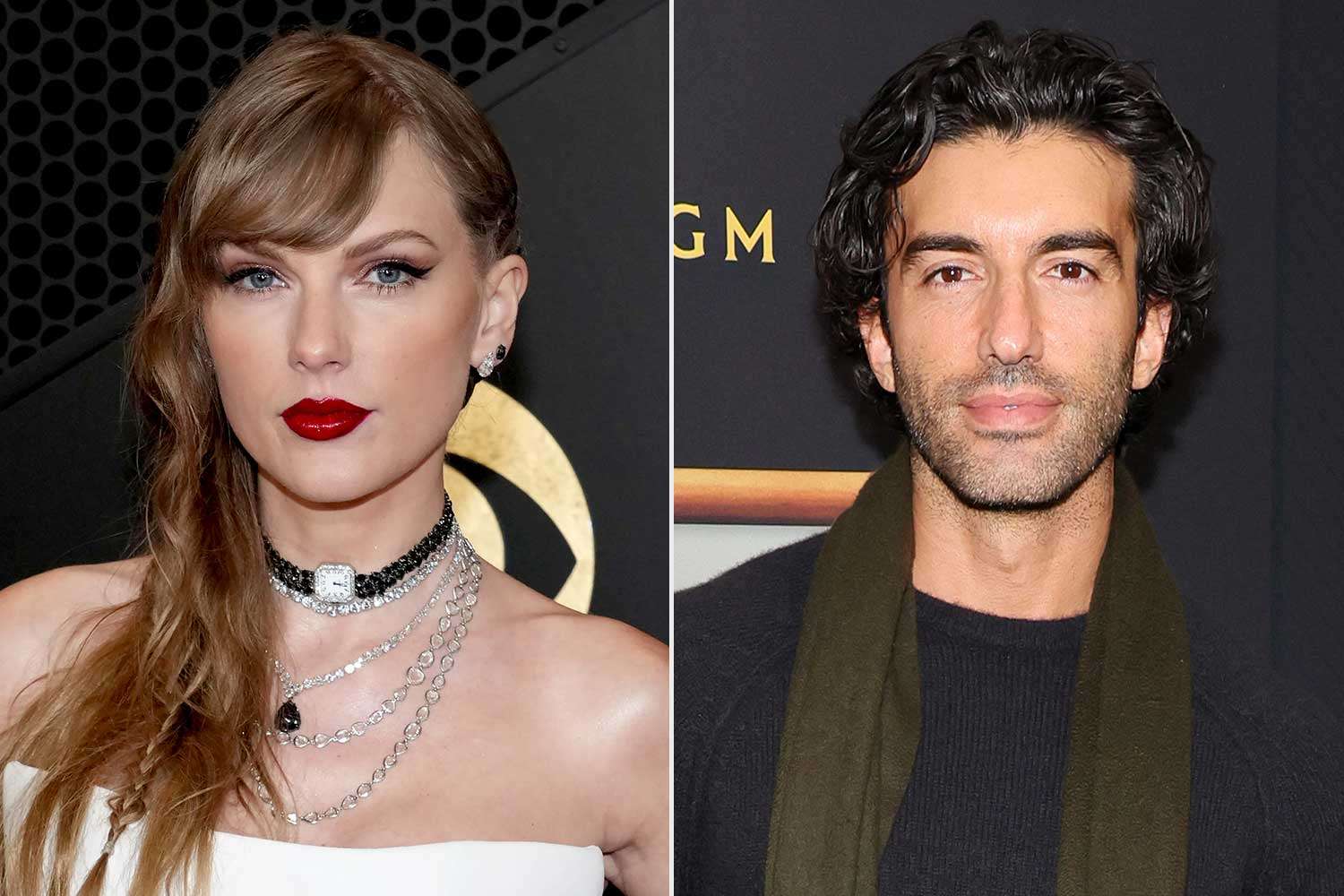
In a plot twist that could rival any Hollywood script, a 48-year-old process server found himself in handcuffs early on September 15, 2025, after allegedly scaling a fence to deliver legal documents to pop superstar Taylor Swift at her boyfriend Travis Kelce’s gated Kansas home. The papers? A deposition subpoena tied to the escalating legal war between It Ends With Us co-stars Blake Lively and Justin Baldoni. What started as a routine service attempt devolved into a misdemeanor trespassing charge, shining an unflattering spotlight on Baldoni’s aggressive legal tactics.
The drama unfolded just after 2 a.m. in the upscale Leawood neighborhood, a quiet suburb south of Kansas City where Kelce, the Kansas City Chiefs tight end, owns a sprawling 3.5-acre estate valued at around $6 million. Justin Lee Fisher, the accused server with a background as a former law enforcement officer, reportedly hopped the perimeter fence in a bid to hand off the documents directly to Swift, who was reportedly staying at the property during a break from her ongoing Eras Tour extension. Leawood Police Department officers arrived swiftly, arresting Fisher on-site for misdemeanor criminal trespassing—jumping onto private property in a secured community.
Police reports, partially redacted for privacy, describe the breach as unauthorized entry into a “private residence in a private neighborhood,” with no mention of violence or resistance. Fisher was released on bond shortly after and is scheduled to appear in Johnson County District Court on October 15, 2025. Neither Kelce nor Swift has publicly commented on the incident, but sources close to the couple told E! News that security protocols at the home were immediately reviewed.
Fisher’s bold move—dubbed a “fence-jumping fiasco” on social media—highlights the lengths to which Baldoni’s legal team has gone to pull Swift into their orbit. But why Swift? And how does this tie into a feud that’s already cost millions in legal fees?
The saga traces back to the 2024 release of It Ends With Us, a domestic abuse drama adapted from Colleen Hoover’s bestselling novel. Lively starred as the resilient Lily Bloom opposite Baldoni’s emotionally abusive Ryle Kincaid, whom Baldoni also directed. What should have been a box-office triumph—grossing over $350 million worldwide—turned toxic amid whispers of on-set tensions.
- December 20, 2024: Lively files a complaint with the California Civil Rights Department against Baldoni, his production company Wayfarer Studios, and associates, alleging sexual harassment, retaliation, and a coordinated smear campaign. She claims Baldoni improvised intimate scenes without consent, pushed for unsolicited nudity, and hired a crisis PR firm to “bury” her after she raised concerns. The fallout allegedly tanked sales for her haircare line, Blake Brown, by up to 78%.
- December 21, 2024: The New York Times publishes a bombshell exposé, prompting Baldoni’s attorney Bryan Freedman to fire back: “It is shameful that Ms. Lively… has filed this baseless lawsuit… to advance her own narrative.” Lively responds in the piece: “I hope that my legal action helps pull back the curtain on these sinister retaliatory tactics.”
- December 31, 2024: Both parties escalate with formal New York lawsuits. Baldoni sues the Times for $250 million in libel, while Lively sues for emotional distress and breach of contract.
- January 16, 2025: Baldoni countersues Lively and her husband, Deadpool star Ryan Reynolds, for $400 million, alleging defamation, extortion, and a “campaign of weaponization” to seize creative control. Lively’s team dismisses it as “abuser playbook” tactics.
- May-June 2025: Baldoni’s team subpoenas Swift, claiming Lively leveraged her friendship (and Reynolds’) during a tense penthouse meeting to force script changes—allegedly texting Baldoni that her “dragons” (Reynolds and Swift) were ready to “go to war.” The subpoena is withdrawn after Swift’s lawyers call it an “abuse of process.” In June, Baldoni’s massive countersuit is dismissed by Judge Lewis J. Liman, who rules it lacks merit but allows potential refiling on narrower grounds.
- July 2025: Lively’s deposition occurs under strict protective orders, with Baldoni in attendance.
- September 12, 2025: Just days before the botched service, Judge Liman denies Baldoni’s plea for a discovery extension to depose Swift, citing the September 30 cutoff (later extended to October 10 for Lively). Freedman’s letter had claimed Swift “agreed” to appear October 20 due to her tour schedule, but her attorney clarified: “My client did not agree… but if forced, we can accommodate the week of October 20.”
The trial is slated for March 9, 2026, with discovery wrapping soon—leaving little room for further celebrity cameos.
Swift’s link to the mess is slim but symbolic. Her 2020 track “My Tears Ricochet”—a raw breakup anthem—anchors the film’s trailer and soundtrack, adding emotional heft to Lively’s arc. Beyond that, a Swift rep emphasized in May: “Taylor Swift never set foot on the set… she did not even see It Ends With Us until weeks after its public release.”
Baldoni’s camp, however, paints her as a key witness to Lively’s alleged power plays, pointing to that fateful meeting where Swift was present as Reynolds and Lively reportedly strong-armed rewrites. A June ruling allowed access to Lively-Swift texts if “relevant,” but under seal. Swift’s team has fought tooth and nail, arguing the pop icon’s private chats are irrelevant to set squabbles.
The failed service at Kelce’s home—where Swift has been spotted nesting amid her whirlwind life—underscores the absurdity. As one legal expert quipped to Vulture, “Subpoenaing a global superstar mid-tour via fence-jump? That’s not service; that’s a security breach.”
As the March trial looms, this fenced-off fiasco serves as a stark reminder: In Hollywood’s legal arenas, even the biggest names can’t escape the drama. Whether Fisher’s tumble derails Baldoni’s strategy remains to be seen—but one thing’s clear: Taylor Swift’s tears ricochet far.