


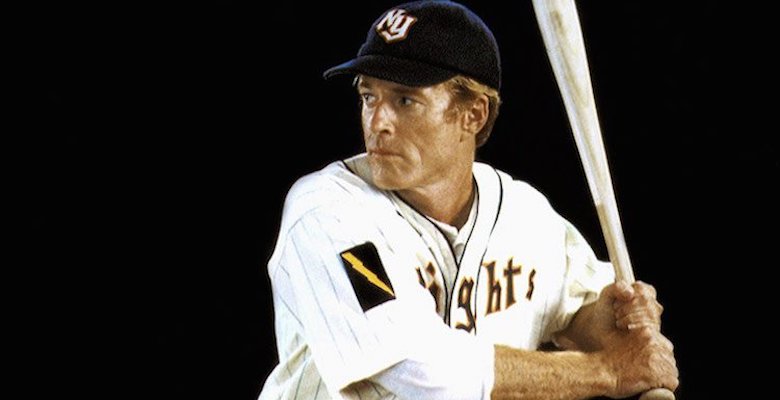
Robert Redford, the golden-haired matinee idol who captivated audiences with his boyish charm, sharp intellect, and unwavering commitment to storytelling, has died at the age of 89. The legendary actor, director, and filmmaker passed away peacefully on Tuesday morning at his home in Utah, surrounded by family, according to a statement from his publicist. His death marks the end of an era for American cinema, leaving behind a legacy that spans blockbuster hits, critically acclaimed indies, and the revolutionary Sundance Film Festival.
Born Charles Robert Redford Jr. on August 18, 1936, in Santa Monica, California, Redford grew up in a working-class neighborhood in Los Angeles. The son of an accountant for Standard Oil and a homemaker, young Redford was a restless spirit—expelled from the University of Colorado for his love of partying, he briefly pursued a career in baseball before discovering his passion for the arts. After studying at the Pratt Institute in New York and the American Academy of Dramatic Arts, he honed his craft on Broadway, appearing in plays like Little Foxes and Tall Story. But it was Hollywood that would immortalize him.
Redford’s film breakthrough came in the late 1960s, when he traded stage lights for the silver screen. His role as the Sundance Kid opposite Paul Newman’s Butch Cassidy in the 1969 Western-comedy Butch Cassidy and the Sundance Kid turned him into an overnight sensation. The film’s witty banter, thrilling chases, and box-office success (it grossed over $100 million worldwide) captured the anti-hero spirit of the era. Redford’s portrayal of the laconic, quick-draw outlaw showcased his effortless cool—a quality that defined his career.
The 1970s solidified Redford as Hollywood’s most bankable leading man. In The Way We Were (1973), he starred alongside Barbra Streisand as a principled writer navigating love and politics during the McCarthy era, earning his first Oscar nomination for Best Actor. That same decade, he reunited with Newman for The Sting (1973), a caper classic about con artists outwitting a mobster during the Great Depression. The film won seven Oscars, including Best Picture, and further cemented their on-screen chemistry. Redford’s thoughtful intensity shone in All the President’s Men (1976), where he played journalist Bob Woodward alongside Dustin Hoffman as Carl Bernstein. The film, chronicling the Watergate scandal, not only earned Redford a second Oscar nod but also underscored his affinity for stories rooted in truth and accountability.
In 1984, Redford delivered one of his most iconic performances as Roy Hobbs in The Natural, a baseball drama adapted from Bernard Malamud’s novel. Playing a gifted but haunted athlete seeking redemption, Redford imbued the role with mythic gravitas, his bat “Wonderboy” and the film’s climactic, slow-motion home run into exploding stadium lights becoming cinematic legend. The film, blending sports with existential themes, showcased Redford’s ability to elevate genre fare into profound storytelling, further cementing his status as a cultural icon.
Behind the camera, Redford proved equally visionary. His directorial debut, Ordinary People (1980), a poignant drama about a family’s grief after the death of a son, won four Oscars, including Best Picture and Best Director for Redford. The film’s raw emotional depth, particularly in scenes featuring Mary Tyler Moore and Timothy Hutton, highlighted Redford’s skill in eliciting powerful performances. He continued directing with successes like Quiz Show (1994), a Best Director nominee exploring the 1950s quiz show scandals, and The Horse Whisperer (1998), which he also starred in.
Perhaps Redford’s most enduring contribution to film was his role in championing independent cinema. In 1978, he co-founded the Utah/US Film Festival, which he renamed the Sundance Film Festival in 1984 after his Sundance Kid character and the Sundance Institute he established in 1981. Nestled in the snowy mountains of Park City, Utah, Sundance became a launchpad for groundbreaking voices, spotlighting filmmakers like Steven Soderbergh (Sex, Lies, and Videotape), Quentin Tarantino (Reservoir Dogs), and countless others. Redford’s vision transformed the festival into a cultural institution, democratizing access to storytelling and nurturing the indie boom of the 1980s and ’90s.
Redford’s later career reflected his eclectic tastes and enduring relevance. He directed and starred in A River Runs Through It (1992), a lyrical adaptation of Norman Maclean’s novella about fly-fishing and family in Montana. In 2018, at age 82, he delivered a final, charismatic performance as real-life bank robber Forrest Tucker in The Old Man & the Gun, opposite Casey Affleck and Sissy Spacek—announcing it as his last acting role. Yet, true to form, he couldn’t resist a cameo in the Sundance-backed series Dark Winds (2022), playing a chess-playing detainee alongside executive producer George R.R. Martin.
Off-screen, Redford was a passionate environmentalist and liberal activist. A trustee of the Natural Resources Defense Council, he fought against projects like the Keystone XL pipeline and used his platform to advocate for conservation. His love for the outdoors infused his work, from the rugged landscapes of Jeremiah Johnson (1972) to the introspective wilderness of A River Runs Through It. Married twice—first to Lola van Wagenen from 1958 to 1985, with whom he had four children, and later to artist Sibylle Szaggars since 2009—Redford faced profound personal losses. His son Scott died of sudden infant death syndrome in 1959 at five months old, and his son James (Jamie) Redford, a documentary filmmaker, passed away from bile duct cancer in 2020 at age 58.
Redford is survived by his wife Sibylle, daughters Shauna (a painter) and Amy (an actress and director), and grandchildren. Tributes poured in from across the industry, with Paul Newman’s daughter Susan noting, “He was the brother Dad never had,” and director Steven Spielberg calling him “the conscience of Hollywood.”
Robert Redford wasn’t just an actor or director; he was a steward of cinema’s soul—blending commercial savvy with artistic integrity, and ensuring diverse stories found their audience. As the Sundance Kid might say, he rode off into the sunset on his own terms, leaving an indelible mark on the world.