


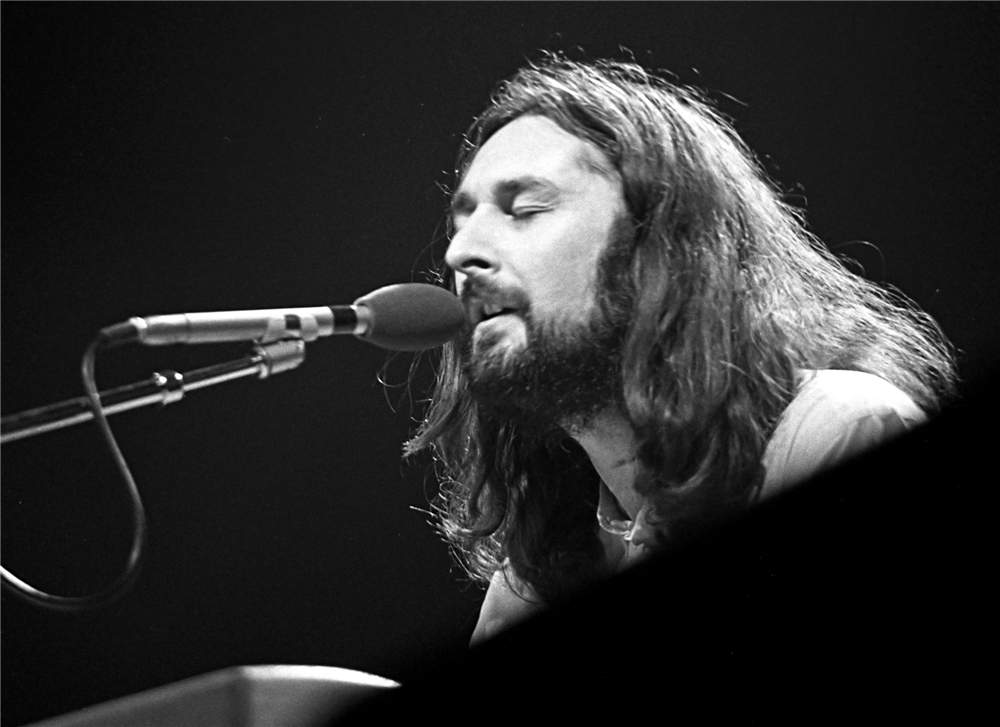
Rick Davies, the co-founder, lead singer, and keyboardist of the iconic British rock band Supertramp, passed away on September 5, 2025, at his home in Long Island, New York. He was 81. The band confirmed his death in a heartfelt statement, noting that Davies succumbed to multiple myeloma, a form of blood cancer he had battled for over a decade. His passing marks the end of an era for fans of Supertramp, whose blend of progressive rock and pop left an indelible mark on music history.
Born on July 22, 1944, in Swindon, England, Davies discovered his passion for music at a young age, inspired by Gene Krupa’s Drummin’ Man. This early encounter sparked a lifelong love for jazz, blues, and rock ‘n’ roll. Initially a drummer, Davies later transitioned to the piano, finding his true calling as a keyboardist. His distinctive playing style, particularly on the Wurlitzer electric piano, became a cornerstone of Supertramp’s sound, characterized by soulful vocals and intricate, jazz-tinged compositions.
Davies formed Supertramp in 1969, initially under the name Daddy, alongside guitarist Richard Palmer, drummer Robert Millar, and vocalist-bassist Roger Hodgson. The band, renamed Supertramp in 1970 after the 1908 book The Autobiography of a Super-Tramp by William Henry Davies, signed with A&M Records and released their self-titled debut album. While early albums gained modest attention, their 1974 release, Crime of the Century, marked a breakthrough, propelled by Davies’ hits like “Bloody Well Right” and the title track. The album’s success showcased the dynamic songwriting partnership between Davies and Hodgson, whose contrasting styles—Davies’ gritty, bluesy edge and Hodgson’s melodic, introspective tone—created a unique yin-yang dynamic.
Supertramp reached its commercial peak with the 1979 album Breakfast in America, which topped charts in the United States and Canada, sold over 18 million copies, and earned two Grammy Awards. Davies’ contributions, including the hit “Goodbye Stranger,” highlighted his raspy baritone and rhythmic piano solos, complementing Hodgson’s “The Logical Song” and “Take the Long Way Home.” The album’s success cemented Supertramp as a defining band of the late 1970s, blending progressive rock’s complexity with pop accessibility.
Tensions between Davies and Hodgson led to Hodgson’s departure in 1983, after which Davies became the sole frontman. He steered Supertramp through albums like Brother Where You Bound (1985) and Free as a Bird (1987), though the band disbanded in 1988. Davies revived Supertramp in 1996, releasing Some Things Never Change (1997) and Slow Motion (2002), and toured until 2012. A planned 2015 reunion tour was canceled due to Davies’ diagnosis with multiple myeloma, which required aggressive treatment.
Despite health challenges, Davies continued performing with a local group, Ricky and the Rockets, as recently as 2022, showcasing his resilience and love for music. His final years were spent with his wife, Sue Davies, who also served as Supertramp’s manager since 1984. The couple shared over five decades together, and Davies was remembered for his warmth and devotion to her.
The band’s statement reflected on Davies’ legacy: “As co-writer, along with partner Roger Hodgson, he was the voice and pianist behind Supertramp’s most iconic songs, leaving an indelible mark on rock music history. His soulful vocals and unmistakable touch on the Wurlitzer became the heartbeat of the band’s sound.” Tributes from fans and musicians, including composer Bear McCreary and SiriusXM host Eric Alper, poured in on social media, celebrating Davies’ talent and the timelessness of songs like “Bloody Well Right” and “Goodbye Stranger.”
Davies’ contributions extended beyond music. His early band, Rick’s Blues, included a young Gilbert O’Sullivan, who later credited Davies as a mentor. Legal disputes over royalties, particularly with Hodgson, persisted into recent years, with a 2025 court ruling addressing songwriting credits. Yet, Davies’ focus remained on his craft, leaving a catalog of songs that continue to resonate with audiences.
Rick Davies is survived by his wife, Sue. His music, from the introspective “Rudy” to the defiant “My Kind of Lady,” endures as a testament to his artistry. As Supertramp’s statement concluded, “Rick’s music and legacy continue to inspire many and bear testament to the fact that great songs never die, they live on.”