


Brett Lemieux, a 45-year-old sports memorabilia dealer from Westfield, Indiana, became the center of a massive controversy in July 2025 when he confessed to orchestrating a decades-long counterfeit scheme that shook the collectibles industry. Lemieux, the founder of MisterManCave, a prominent online platform for autographed sports memorabilia, admitted to selling over four million fake items, generating more than $350 million in sales. His confession, posted on the Facebook group “Autographs 101,” detailed a sophisticated operation involving forged signatures and counterfeit authentication holograms from major companies like Fanatics, Panini, and Tri-Star. Tragically, hours after his public admission, Lemieux was found dead from a self-inflicted gunshot wound during a police raid, leaving the sports memorabilia world grappling with the fallout of his actions.
Lemieux’s history in the sports memorabilia industry was marked by earlier controversies. In 2013, as the owner of Ultimate Athlete Ink and Ultimate Sports Connection, he faced a lawsuit from the Indiana Attorney General’s Office after 17 customers reported non-delivery of purchased items. Court records show Lemieux settled for $8,143.62 and was restricted from selling memorabilia directly online, except through Amazon. Despite this, he continued operations, allegedly violating the settlement by selling on eBay and other platforms, leading to further complaints. These early issues hinted at the deceptive practices that would later define his career.
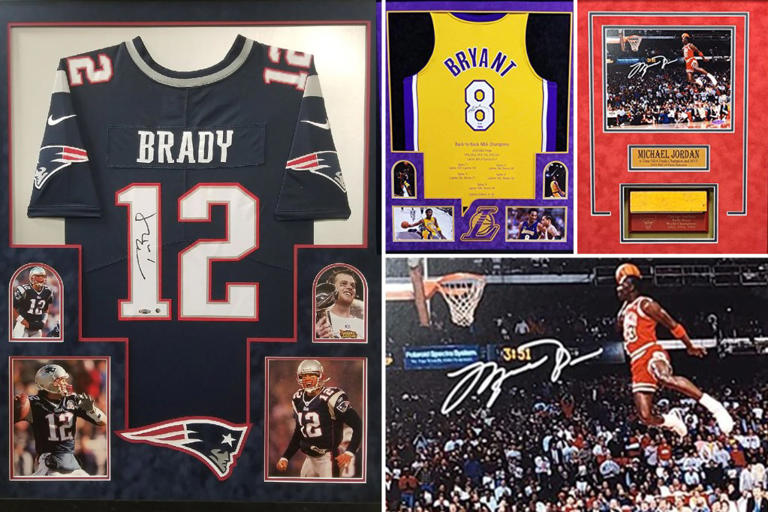
Lemieux’s operation, run through MisterManCave, was built on forging autographs using autopen technology and creating counterfeit holograms that mimicked those of reputable authentication companies. His confession revealed a staggering scale: millions of fake items, including autographs of stars like Tom Brady, Patrick Mahomes, Aaron Judge, and Kobe Bryant, flooded the market. Notably, Lemieux claimed to have released 80,000 counterfeit items following Kobe Bryant’s death in 2020, capitalizing on the surge in demand. He boasted of selling items at lower prices—such as an Aaron Judge ball for $399 compared to Fanatics’ $699—making his fakes attractive to unsuspecting collectors.
The scheme’s sophistication was evident in its ability to evade detection for nearly 20 years. Lemieux described it as an “addiction,” driven by the thrill of outsmarting the industry and the lure of easy money, with potential weekly earnings of $100,000. He claimed to have targeted companies that challenged him, stating, “Once you came at me or spoke my name, I went after you and your company directly.” His operation involved alleged accomplices, though their involvement remains unverified, and was run so covertly that even employees were unaware of the forgeries.
The unraveling began when Fanatics, a leading memorabilia company, grew suspicious of Lemieux’s activities. Over several years, Fanatics conducted “test buys” from marketplace accounts linked to Lemieux, building a case for law enforcement. In 2023, the company updated its hologram technology to counter forgeries, partly due to Lemieux’s actions. On July 15, 2025, Westfield police, with FBI assistance, raided a property on South Park Drive linked to Lemieux’s business. The following day, a second raid at a Hoover Street location—owned by Club Wag Investments LLC, where Lemieux was the registered agent—uncovered his body.
Hours before his death, Lemieux posted a 1,200-word confession on Facebook, detailing the scope of his fraud. He claimed the raided warehouses held $500–700 million in counterfeit holograms and cards, calling the operation a “rush” he couldn’t quit. The post, since deleted but widely circulated via screenshots, sent shockwaves through the industry. Autograph expert Steve Grad, a principal authenticator at Beckett Authentication, described the scheme as potentially surpassing the infamous Operation Bullpen, a 1999–2006 FBI investigation into $100 million in autograph fraud.
The sports memorabilia market was left reeling. Industry insiders, while unsurprised by Lemieux’s reputation, questioned the scale of his claims. Some, like an anonymous dealer cited by cllct.com, argued that $350 million in sales would have “crushed” the industry, suggesting the numbers might be exaggerated. Fanatics denied purchasing directly from Lemieux and emphasized its enhanced hologram security. Companies like Tri-Star and James Spence Authentics, named in the confession, have not publicly responded. The scandal reignited debates about oversight and authentication, with collectors urged to buy from reputable sources to avoid fakes.
Lemieux’s actions have cast a long shadow, potentially devaluing autographs and eroding trust in the market. Collectors expressed concern on platforms like Reddit, with some wondering if authentic items from sealed boxes might rise in value due to increased scrutiny. The industry faces a daunting task: identifying and removing millions of fakes, a process that could take years.
Lemieux’s story is one of ambition, deception, and tragedy. His confession painted a picture of a man consumed by the thrill of fraud, yet aware of its moral weight, as he expressed a desire to expose the scheme. His death, confirmed by the Hamilton County Coroner’s Office as a suicide, ended any chance of legal accountability but left a lasting impact on the industry he exploited. As investigations continue, the “Lemieux Scandal” stands as a cautionary tale of unchecked greed and the fragility of trust in the collectibles market.